
Posted by: AGelbert
« on: October 14, 2023, 09:55:31 pm » 017 The Birth Of The Rose Wind Turbine
TNT Omnibus 23.9K subscribers 71,267 views Sep 28, 2023
The Rose Wind Turbine In Use 16,524 views Sep 29, 2023
Posted by: AGelbert
« on: September 21, 2023, 04:06:07 pm »
September 20, 2023 By Mike Schuler
The Biden Administration has issued a comprehensive roadmap to accelerate offshore wind transmission in the U.S. Atlantic region.
The action plan, released today but the Departments of the Interior and Energy, aims to help unlock the region’s renewable energy potential, strengthen the domestic supply chain, and create union jobs.
The plan outlines immediate actions to connect first-generation of offshore wind projects to the electric grid and long-term efforts to support transmission over the next few decades, providing for more efficient energy delivery.
The plan sets out short, medium, and long-term goals along with recommendations for establishing collaborative bodies, updating transmission planning, addressing costs, and convening with states, industry, and federal agencies to plan for an offshore transmission network. It also suggests standardizing HVDC technology requirements and establishing a national testing and certification center for HVDC substations.
The plan is part of the administration’s goal to deploy 30 GW of offshore wind by 2030 and achieve a 100% clean electric grid by 2035. The Energy Department and Atlantic states have already started collaborating on the formation of an Offshore Wind Transmission State Collaborative to develop a shared vision on policy and coordination for offshore transmission development.

The Action Plan was developed based on the Atlantic Offshore Wind Transmission Study, which is due to be released soon by the National Renewable Energy Laboratory and Pacific Northwest National Laboratory. It was also informed by a series of convening workshops with subject matter experts and decision makers from Tribal nations, state governments, and regional transmission operators, taking place from April 2022 to March 2023.
https://gcaptain.com/biden-administration-issues-roadmap-to-boosting-atlantic-offshore-wind-transmission/

Posted by: AGelbert
« on: July 07, 2023, 01:37:10 pm »July 6, 2023 By John Konrad
The 🌊 Challenging Future Of Floating Wind Farms
SNIPPETS:
The industry is locked in a race against time, innovating and experimenting with various floater designs. Some are opting for concrete over steel, as exemplified by the Hywind Tampen project. However, the future seems to favor steel, with the majority of the floating offshore wind farms in the coming years expected to be steel-based. The steel requirement for each floater is estimated to be twice that of monopile foundations for bottom-fixed wind farms. This implies that managing a floating wind project’s capital expenditure will necessitate large and cost-efficient fabrication capacities, likely situated far from the installation sites in Europe or the US.
Why this insatiable demand for steel? The answer lies in the realm of physics.

Picture these turbines as towering giants, their heads piercing the sky, their bodies plunging into the depths of the sea. They stand tall, like a lever arm, with the wind exerting its force high up at the turbine’s shaft. This scenario is reminiscent of a child on a seesaw, pushing down on one end with all their might. The turbine, like the seesaw, experiences a torque, a rotational force that threatens to topple it.
Beneath the surface, the floater serves as a counterbalance, akin to the leaded keel of a sailboat. It provides a low center of gravity, helping to keep the structure upright. But this is only part of the solution. The wind, relentless and powerful, pushes against the turbine, threatening to displace it from its location.
This is where anchors or tension legs – connected via thick cables – come into play, serving as the roots of these sea giants. They dig deep into the seabed, holding the turbine in place, much like the roots of a tree gripping the earth to withstand a storm. These anchors or tension legs counteract the force of the wind, preventing the turbine from being pushed off its location. ... ...
The sea, in all its majestic grandeur, is a realm of relentless forces. It is a world where saltwater gnaws at metal, where winds howl with unyielding ferocity, and where waves 🌊 crash with the power of a thousand hammers.

In this harsh and unforgiving environment, our floating wind turbines would stand as defiant sentinels, their survival a testament to human ingenuity. Yet, their existence will be a constant battle against the elements.
The longevity and reliability of these structures are paramount, but achieving this is no small feat. The corrosive saltwater, the battering winds, and the relentless waves all conspire to wear down the turbines and their components. Regular maintenance is the shield against this onslaught, a necessary ritual to ensure their continued operation.
Yet, the task of maintenance is a complex dance with the elements. The turbines stand in remote locations, far from the comforting shores, making them difficult to access. The logistics of this task are akin to the challenges faced by the oil and gas industry in their deepwater construction projects. The costs, both financial and logistical, are substantial, but they are the price we pay for harnessing the power of the wind in the vast expanse of the sea.
The other shield is engineering durability into the design, this is effective but requires the use of expensive metals and high-end components.
Full article:


https://gcaptain.com/challenging-future-of-floating-wind-farms/
Posted by: AGelbert
« on: May 31, 2023, 03:41:23 pm »May 30, 2023 By Mike Schuler
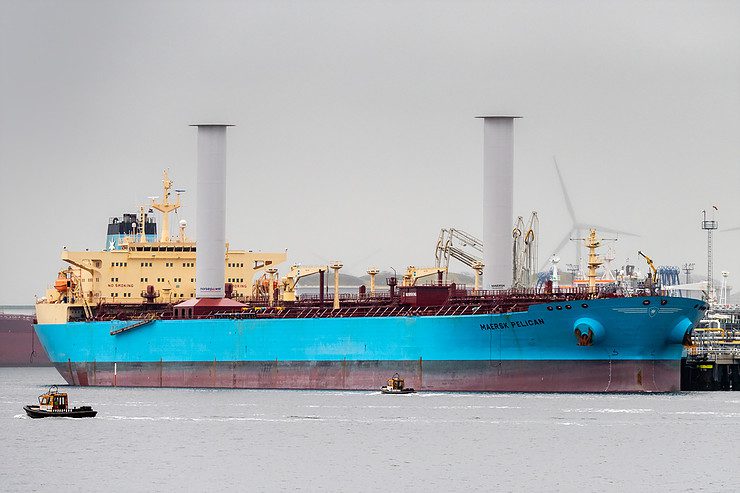
New Study Confirms Fuel Savings  from Norsepower Rotor Sails and Weather Routing
from Norsepower Rotor Sails and Weather RoutingSNIPPETS:
For the study, Norsepower worked with leading maritime software and data services expert, NAPA, and Sumitomo Heavy Industries Marine & Engineering (SHI-ME), one of the world’s top shipyards. The companies are announcing the results of the first phase of the project exploring the potential for fuel savings and emissions reduction from a combination of Norsepower’s Rotor Sail solution and NAPA Voyage Optimization on one of SHI-ME’s ships.
Norsepower Rotor Sails is a modernized version of the Flettner rotor that uses the magnus effect to generate forward thrust, reducing overall fuel consumption and associated greenhouse gas emissions. The technology has been used across multiple sectors of the shipping industry for over eight years and has 250,000 operating hours of verified performance data, revealing fuel consumption savings of anywhere from 5-25%.
The initial phase of the simulation project, conducted from December 2022 to March 2023, revealed that the integration of NAPA Voyage Optimization with the Norsepower Rotor Sail could achieve an average emissions reduction of 28% on the New York to Amsterdam Atlantic route. NAPA Voyage Optimization contributed approximately 12% to these CO2 emissions savings. ... ...
Phase two of the research project, commencing in May 2023, aims to expand on the initial findings and optimize vessel performance with Norsepower Rotor Sails using fleet data. Advanced performance analysis will be conducted to enhance operational efficiency and explore new optimization strategies. SHI-ME intends to develop a new proof of concept for wind-assisted ships equipped with Norsepower Rotor Sails as part of this project. ... ...
Jukka Kuuskoski, Chief Sales Officer of Norsepower, emphasized the importance of clean technologies in addressing fuel-saving and environmental concerns. “This performance data on the benefits of adopting clean technologies will give the industry the necessary confidence to invest in decarbonization,” said Kuuskoski

Full article:

https://gcaptain.com/new-study-confirms-fuel-savings-from-norsepower-rotor-sails-and-weather-routing/
Posted by: AGelbert
« on: April 14, 2023, 01:05:32 pm »April 13, 2023 By Mike Schuler
Havfram Wind Adds to Contract Backlog
RWE and Northland Power are one step closer to deploying their joint offshore wind project, Nordseecluster, after selecting Havfram Wind as the preferred supplier.
The Nordseecluster project will produce up to ⚡ 1.6 gigawatts (GW) of power and consist of four offshore wind farm sites in the German North Sea.

Havfram Wind will transport and support the installation of a minimum of 104 Vestas offshore wind turbines with a capacity of 15 MW each.
The Nordseecluster will be constructed in two phases, with commercial operations starting in early 2027 and early 2029, respectively.
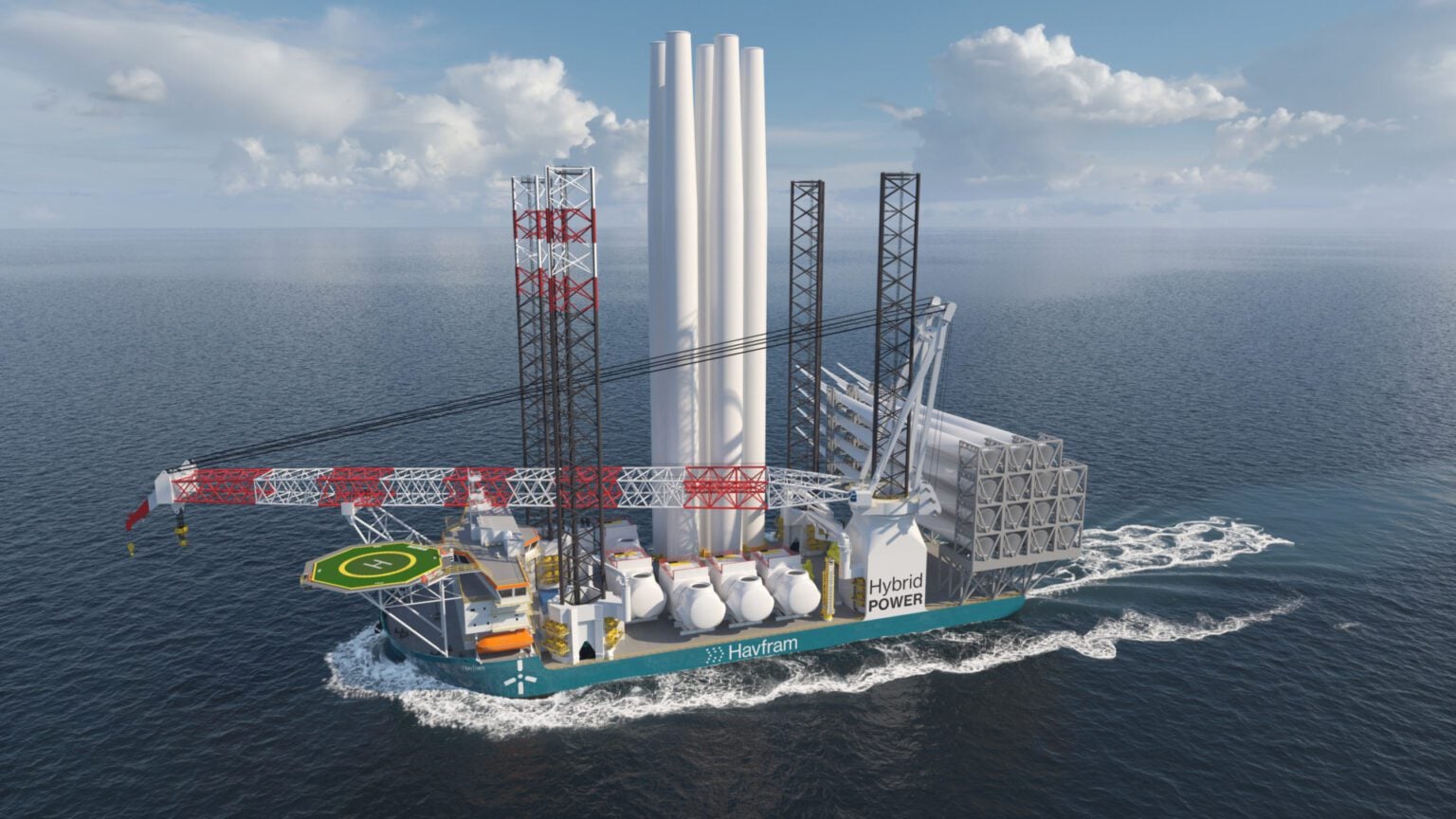
Havfram Wind will be utilizing one of its newly built NG20000X Jack-Up vessels with a 3,250-tonne crane.
The project is expected to generate enough green electricity to supply the equivalent of 1.6 million German households every year.
“Signing the preferred supplier agreement for the transport and installation support of the entire lot of wind turbines for a gigantic project like Nordseecluster is proof of our growing position in the market,” said Even Larsen, CEO Havfram Wind. “I am proud of the trust RWE and Northland Power have in the Havfram Wind team. Participating in such a project of scale is a milestone for our development as a pure play offshore wind company.”
The NG20000X jack-up is one of up to four Wind Turbine Installation Vessels (WTIVs) Havfram Wind has on order at the at CIMC-Raffles shipyard in China. The vessels, equipped with a 3,250-tonne crane and hybrid battery propulsion, will be capable of handling the world’s largest wind turbines (20+ megawatts) in waters up to 70 meters deep. Delivery of the first vessel is due in 2024.
Last month, offshore wind developer Ørsted selected Havfram Wind to install turbines for the massive Hornsea 3 offshore wind farm project in the North Sea off England. The colossal project will encompass up to 231 offshore wind turbines producing ⚡ 2.8 GW of offshore wind energy.

Havfram was reorganized in 2022 following a $250 million investment from its majority shareholder, Seabrook Capital, along with Canada’s PSP investment. Under the new structure, Havfram AS (formerly known as Ocean Installer AS) was split into Havfram Wind, which will focus entirely on the offshore wind sector, and Havfram Subsea, a subsea company.
https://gcaptain.com/havfram-wind-adds-to-contract-backlog/
Posted by: AGelbert
« on: March 01, 2023, 03:39:51 pm »February 1, 2022 By Barry Parker (gCaptain) –
Offshore Wind’s Jones Act Supply Chain Getting into  Gear
Gear
GearSNIPPET:
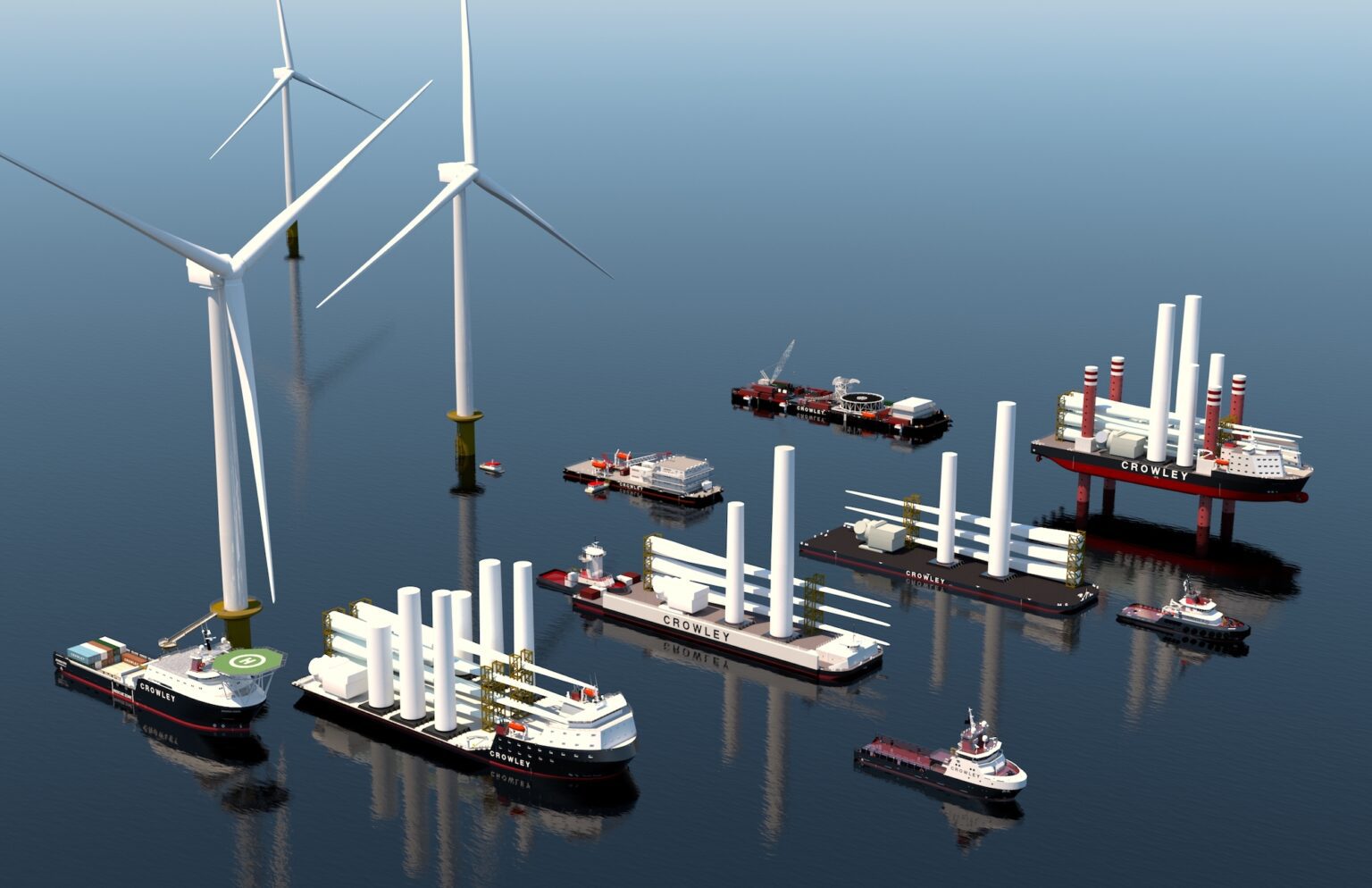
Panelist Jeff Andreini of Crowley, which is involved in multiple aspects of the business (“across five verticals”), conveyed his company’s enthusiasm, as indicated by views such as: “Crowley is extremely bullish” and “we are all in,” when describing Crowley’s commitment. He he explained the company had begun in 2016 “chartering our tugs and barges to be able to do the feedering that’s going to be required today.”
The company’s involvement “ramped up in 2020, when: “we decided that we wanted to be much more than just a tug and barge provider. Today our vision is to be a full-service turnkey provider for the supply chain.”
He acknowledged that skepticism exists about offshore wind’s course forward, but said: “We are not [skeptical]…in fact, we have won contracts and will get started with our first one here in May, when we will be transporting, via tug and barge, the transformer for the South Fork project—out of the Gulf of Mexico up to New York. We will follow that up with our first feedering project—two tugs and a barge, to do the transportation of the components of the South Fork project, out of New London, Connecticut. And, then, next year, working together with Fred Olsen… out of the New Jersey wind port, we’ll be transporting 98 turbines…for well over a year and a half.”
The 1.1 gW Ocean Wind 1 windfarm, in Atlantic waters east of Cape May, New Jersey. will be a much larger project than the 132 mW South Fork wind farm, located in waters to the east of Montauk, New York, and utilizing 12 turbines.
Full article:
https://gcaptain.com/offshore-winds-jones-act-supply-chain-getting-into-gear/
Posted by: AGelbert
« on: February 22, 2023, 11:50:11 am »
February 20, 2023

NJ regulators bypass 🐘🦖👿 local opposition to advance offshore wind farm
SNIPPETS:
They used an amendment to New Jersey’s offshore wind law passed in 2021 and signed into law by Democratic Gov. Phil Murphy removing most local control over where offshore wind projects come ashore. The law enables an offshore wind developer to apply to the utilities board for an order superseding local control over such projects. ... ...
Fiordaliso said the route of the proposed transmission line will not harm Ocean City or Cape May County aesthetically or economically. The ⚡ power cable will run from wind turbines that the company says will be located 15 miles offshore and come ashore in Ocean City, where it will run underground along existing roadways and ⚡ connect to the ⚡ electrical grid at the site of the former B.L. England power plant in Upper Township.
Full article:
https://www.renewableenergyworld.com/wind-power/nj-regulators-bypass-local-opposition-to-advance-offshore-wind-farm/
Posted by: AGelbert
« on: December 20, 2022, 12:26:22 pm »December 19, 2022 Bloomberg
Wind Power Giant Will Make Green Shipping Fuel at Big Plant in Sweden
SNIPPET:
FlagshipONE combines a series of technologies that will all play a growing role in the coming years if the EU is to achieve its ambition to reach net-zero emissions by the middle of the century.
In one part, the site will use 70 megawatts of electrolyzers supplied by Siemens Energy AG to produce hydrogen from Sweden’s electric grid that’s more than 90% supplied by renewable sources. At the same time, machines made by startup Carbon Clean will trap CO2 that’s released from a nearby combined heat and power plant that burns biomass. That CO2 will be combined with the hydrogen using synthesis equipment from Topsoe to form methanol, which can be used to fuel ships.
The 50,000 tons of the fuel will be roughly enough to power a single vessel to make a transatlantic voyage, Breese said. It could also be used locally to power ferries within Europe, rather than using 🦖 fossil fuels.
Full article:
https://gcaptain.com/wind-power-giant-will-make-green-shipping-fuel-at-big-plant-in-sweden
Posted by: AGelbert
« on: December 12, 2022, 03:57:08 pm »December 11, 2022 Editorial

How Do Floating Wind Turbines Work?
SNIPPETS:
Three main ways to float a turbine
A floating wind turbine works just like other wind turbines – wind pushes on the blades, causing the rotor to turn, which drives a generator that creates electricity. But instead of having its tower embedded directly into the ground or the seafloor, a floating wind turbine sits on a platform with mooring lines, such as chains or ropes, that connect to anchors in the seabed below.
These mooring lines hold the turbine in place against the wind and keep it connected to the cable that sends its electricity back to shore.
Most of the stability is provided by the floating platform itself. The trick is to design the platform so the turbine doesn’t tip too far in strong winds or storms.

There are three main types of platforms:
֍ A spar buoy platform is a long hollow cylinder that extends downward from the turbine tower. It floats vertically in deep water, weighted with ballast in the bottom of the cylinder to lower its center of gravity. It’s then anchored in place, but with slack lines that allow it to move with the water to avoid damage. Spar buoys have been used by the oil and gas industry for years for offshore operations.
֍ Semisubmersible platforms have large floating hulls that spread out from the tower, also anchored to prevent drifting. Designers have been experimenting with multiple turbines on some of these hulls.

֍ Tension leg platforms have smaller platforms with taut lines running straight to the floor below. These are lighter but more vulnerable to earthquakes or tsunamis because they rely more on the mooring lines and anchors for stability.
Each platform must support the weight of the turbine and remain stable while the turbine operates. It can do this in part because the hollow platform, often made of large steel or concrete structures, provides buoyancy to support the turbine. Since some can be fully assembled in port and towed out for installation, they might be far cheaper than fixed-bottom structures, which require specialty vessels for installation on site. ... ...
Why do we need floating turbines?
Full detailed article:
https://gcaptain.com/how-do-floating-wind-turbines-work/
Posted by: AGelbert
« on: December 07, 2022, 05:22:31 pm »December 6, 2022 by Mike Schuler
 Kite System for Ships Trialed on Transatlantic Voyage
France-based wind propulsion specialist Airseas is sharing the first footage of its automated kite system Seawing in use during transatlantic sea trials.
The trial took place on board the roll-on/roll-off ship Ville de Bordeaux as it transported aircraft components between Europe and the United States. With the release of the new footage, Airseas is also announcing the successful completion of the crucial initial stages of sea trials.
Flying at an altitude of about 200 meters, the Seawing system comes in both 250 sq meter 500 sq meter versions, both of which were on board for the trial.
Combining expertise from the aerospace and maritime sectors, Seawing is aiming to slash fuel consumption and emissions by an average of 20% by harnessing the wind to reduce the main engine load. It’s using “digital twins” and advanced automation systems to ensure that the system could be safely deployed, operated and stored at the push of a button with minimal input or training needed from crew.
The 154-meter-long Ville de Bordeaux is operated by Louis Dreyfus Armateurs (LDA) and chartered by Airbus, Airseas’ minority shareholder and launch customer. A team of Airseas engineers is on board to test the system and gather data, with the operational support of LDA’s crew and Airbus’ Transport & Logistics department.


The Seawing system has applications on virtually any type of commercial vessel. Airseas has also received firm orders from K Line, a Japanese shipowner who owns the fifth largest fleet worldwide, for five Seawing systems, with additional options to equip up to 51 vessels in total.

Airseas says the first stages of the sea trials have successfully validated key steps such as the folding and unfolding of the wing, take-off and landing, and flights in altitude. The next phase will test the Seawing in a broader range of weather conditions and fine-tune the automation system.
“Seeing the Seawing in action on a commercial vessel is such a proud moment for us, and the culmination of years of meticulous research and development,” said Vincent Bernatets, CEO of Airseas. “Testing a brand new technology in real-life conditions and while respecting the operational constraints of a commercial ship is an ambitious endeavour, and the solid progress of our sea trials is a testimony to the dedication of our team of engineers on board and on shore.”
“With these strong initial results, we’re more determined than ever to keep testing the system and collecting data, and accelerate our mission to scale up and rapidly deploy wind propulsion technology on vessels around the world. Immediate action is needed to tackle climate change and shipping’s impact on GHG emissions; we are proud to have a solution that can help ships reduce their emissions right now, and accelerate the decarbonisation of the maritime sector over the coming years.,” Bernatets added.
The deployment of Seawing on commercial voyages could mark an important milestone for wind propulsion technology in commercial maritime shipping, which is responsible for about 3% of global greenhouse gas emissions.
“We are committed to playing an active role in reducing shipping’s carbon emissions, starting now. We are proud to be associated with this project as a supplier and partner of Airbus, working for the success of this innovative wind propulsion solution alongside Airseas,” said Antoine Person, Corporate Secretary of Louis Dreyfus Armateurs.
https://gcaptain.com/new-kite-system-for-ships-trialed-on-transatlantic-voyage/
Posted by: AGelbert
« on: October 13, 2022, 04:08:33 pm »October 12, 2022 By Mike Schuler
Floating Offshore Wind Pipeline Sees Explosive Growth
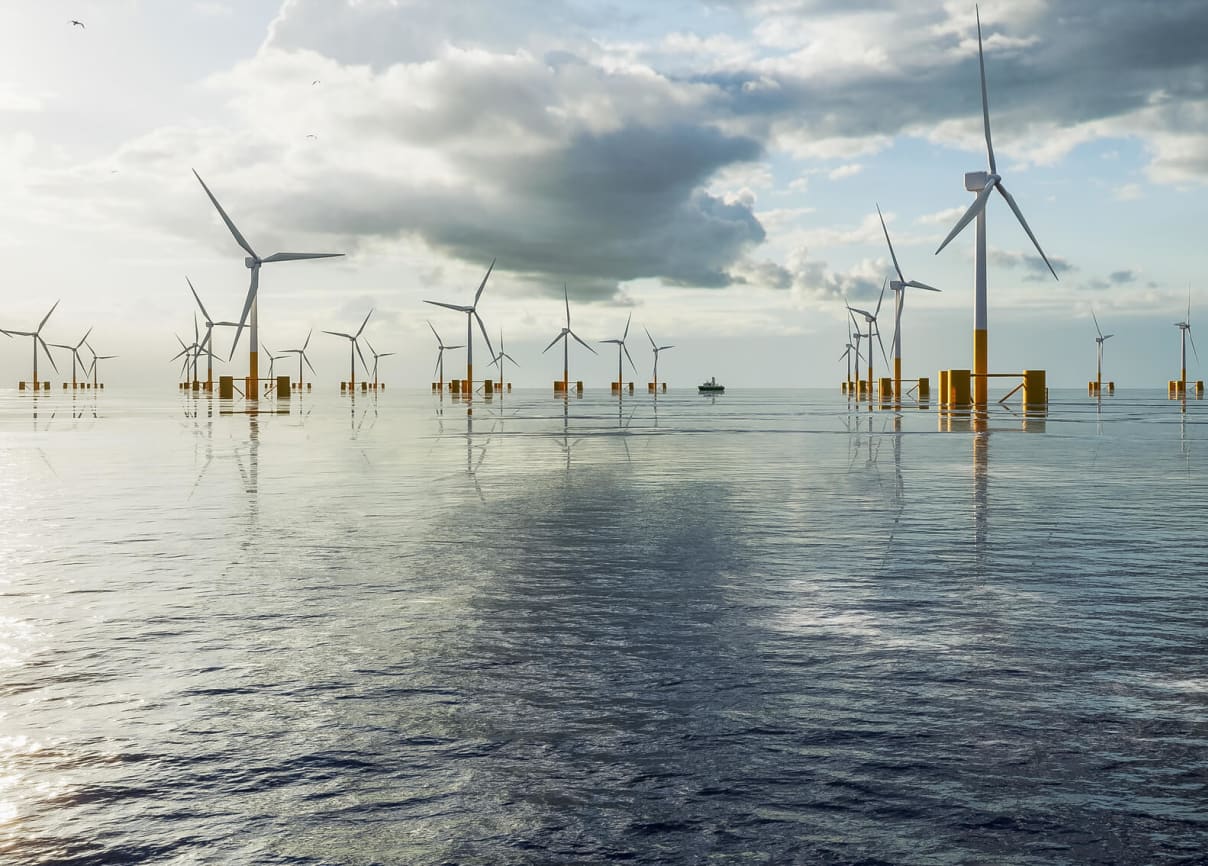
The global pipeline of floating offshore wind projects has more than doubled in terms of capacity in the past year with the UK leading the charge, according to a new report by RenewableUK.
According to the report, the number of projects in the global pipeline, spanning from those in early planning stages to operational, has increased from 130 projects to 230 projects in just the last 12 months. In terms of capacity, the pipeline has expanded from 91GW a year ago to 185GW today.
The pipeline in the UK is much larger than that of any other country. A year ago, the UK had 23GW worth of floating wind capacity in the pipeline, compared to over 33GW today. Over the same period, the number of projects has increased from 29 to 51, with projects planned in the North Sea, Celtic Sea and the North Atlantic Ocean.
Among the 185GW global pipeline, nine projects representing 121MW capacity are fully commissioned in seven countries. Another 96MW worth of projects are under construction, 288MW are consented or in the pre-construction phase, 31GW are in planning or has a lease agreement, and 153GW are in early development or in the leasing process.
Europe represents approximately 58%, or 107GW, of the floating capacity pipeline, while UK represents 18% with 33.3GW, of which 29GW is planned in Scottish waters. Outside Europe, leasing areas off the west coast of the United States, along with project proposals off the south east coast of Australia and South Korea, make up the majority of the rest of the capacity.
The report states that by the end of 2030, commissioned floating wind capacity in the UK could reach 11GW, with 31GW in Europe and 41GW globally.
The report also notes that demand for floating foundations is expected to ramp up fast, with the potential for nearly 1,000 floating foundations to be installed in UK waters by the end of 2030, with 3,200 floating foundations installed globally by the end of the decade.
“The growth of floating offshore wind is surging ahead at a phenomenal rate year on year around the world. We’re proud that the UK is a global leader in this innovative technology with nearly a fifth of the total pipeline – significantly greater than any other country,” say RenewableUK’s CEO Dan McGrail. “In the years ahead, as we build projects further out to sea where wind speeds are even stronger, floating wind will play a central role in proving cheap, clean electricity for British homes as well as boosting our energy security.
“It also offers a significant opportunity to build up a whole new industry in the UK, with a world-class supply chain which will enable us to export our expertise and state of the art technology worldwide,” McGrail adds.
https://gcaptain.com/floating-offshore-wind-pipeline-sees-explosive-growth/
Posted by: AGelbert
« on: October 11, 2022, 04:51:57 pm »October 10, 2022 By Mike Schuler
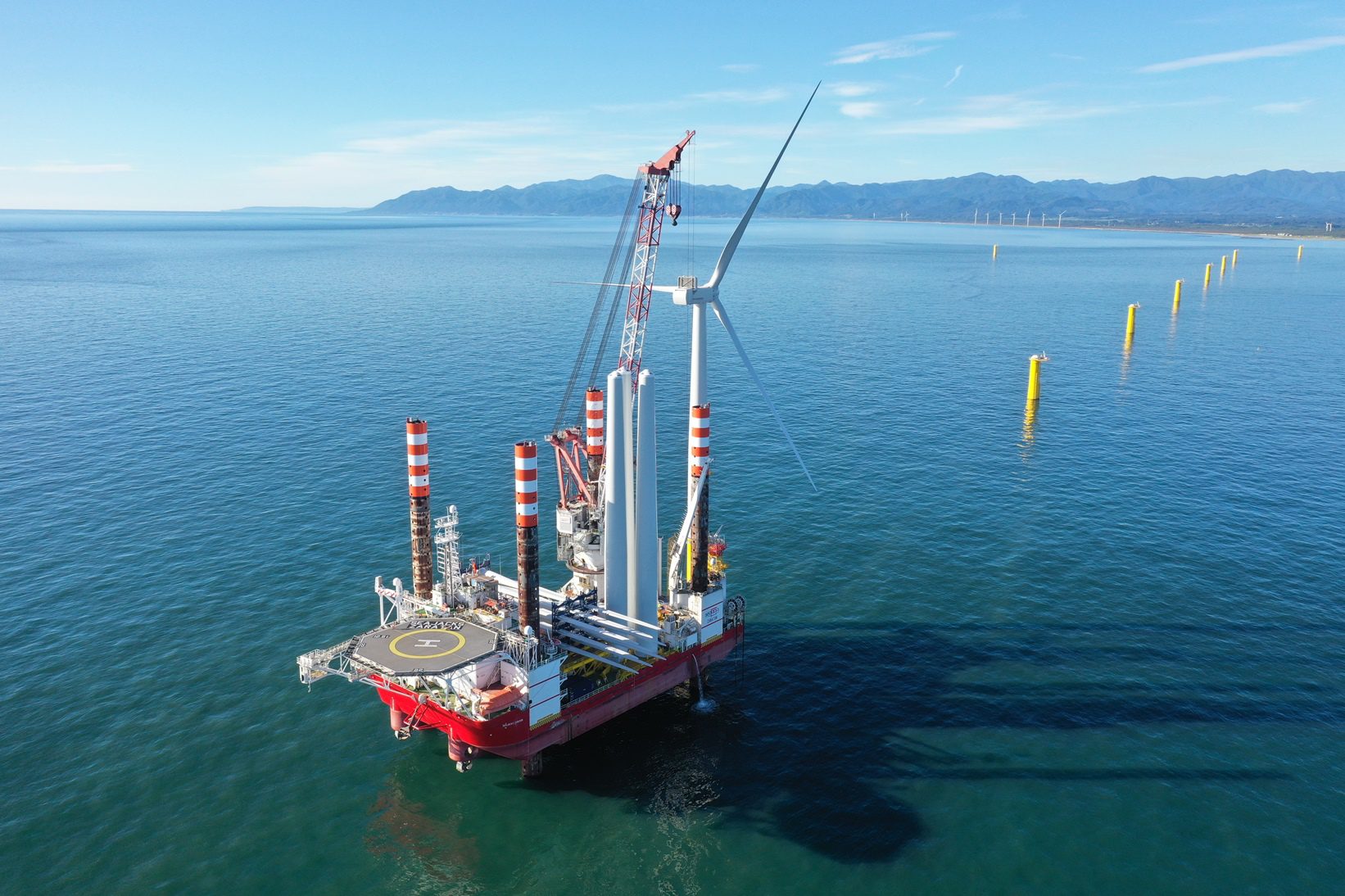
Japan’s First Commercial Offshore Wind Farm Takes Shape 
All 33 offshore wind turbines have now been installed
at Japan’s first commercial-scale offshore wind farm.The installation was carried out by Seajacks International’s Seajacks Zaratan jackup vessel at the Akita and Noshiro offshore wind farm situated off the Japanese Akita Prefecture.
The project, which is owned by Akita Offshore Wind Corporation (AOW), is the first commercial-scale fixed-bottom wind farm to be constructed in Japan. It is being constructed at two locations just off Akita Port and the nearby Noshiro Port.
The two locations have a total capacity of 140 megawatts (MW), enough to ⚡ power approximately 150,000 homes. The power will be sold to Tohoku Electric Power Co. under a 20-year purchase agreement.

“The completion of the turbine installation at Akita and Noshiro is an achievement that all parties involved can be proud of.
 The project is a powerful demonstration of a successful collaboration between international partners to deliver a successful project outcome,” said Seajacks CEO, Blair Ainslie. “It is a testament to the capabilities of all parties, that the project has been completed safely and without any major incidents, despite the challenges of the Covid-19 pandemic.”
Commercial operations of the wind farm are planned to begin later this year.
UK-based Seajacks International is a wholly owned subsidiary of Eneti Inc. (NYSE: NETI). The company owns and operates an advanced fleet of self-propelled jack-up vessels
 operating in offshore wind and oil and gas sectors.
https://gcaptain.com/japans-first-commercial-offshore-wind-farm-takes-shape/
Posted by: AGelbert
« on: October 07, 2022, 03:43:51 pm »Dyneema® is helping deliver a renewable energy future 
APPLICATIONS Ropes, Lines, Slings & Chains
Dyneema® 5.11K subscribers
At DSM we are proud to play an important role in renewable energy generation. We are committed to the United Nations Sustainable Development goals, and as part of this continue to advocate responsible action on climate change with our stakeholders, while increasing the use of renewables in our energy mix to reduce our carbon footprint. Dyneema® is helping deliver a renewable energy future.
With renewable power sources like wind farms increasingly recognized as an answer to the world’s rising ⚡ energy demands, ropes, slings and synthetic chains made with Dyneema® will play a significant role in making renewable energy viable.
https://www.dsm.com/dyneema/en_GB/home.html
