
Where Olive Trees Weep: Processing the Trauma of Occupation
The 🕊️ Chris Hedges YouTube Channel 46.7K subscribers Oct 2, 2024
Support my independent journalism at Substack:
https://chrishedges.substack.com/Follow me on social media:
https://linktr.ee/chrishedgesThe  world has failed Palestine.
 The United States and European Union pay lip service to principles of human rights and democracy while providing limitless support to Israel’s genocidal project of ethnic cleansing and apartheid. Western media outlets censor reporting of Israeli atrocities, and international humanitarian organizations require that Palestinians prove their victimhood over and over again. Arab states, on the whole, remain silent and complicit.
In the context of so much injustice, the new documentary Where the Olive Trees Weep offers a rare view into the everyday experience and psychological ramifications of occupation. Filmed in 2022 in the West Bank, the film follows Palestinian journalist and therapist Ashira Darwish, Israeli journalist Amira Haas, activist Ahed Tamimi, Dr. Gabor Maté, and others. On this episode of The Chris Hedges Report, Chris Hedges speaks with Ashira Darwish and with the film’s directors and producers, Zaya Ralitza Benazzo and Maurizio Benazzo.
Host: Chris Hedges Producer: Max Jones Intro: Sofia Menemenlis Crew:Diego Ramos, Sofia Menemenlis and Thomas Hedges Transcript: Sofia Menemenlis
The Chris Hedges Report is a reader-supported publication. To receive new posts and support my work, consider becoming a free or paid subscriber.
TranscriptChris Hedges
Where Olive Trees Weep is a new documentary that chronicles the long Palestinian struggle against Israeli apartheid, including Israel's dispossession of Palestinian land, the loss of basic civil liberties for those under occupation, along with the daily humiliation, indiscriminate violence and trauma that defines Palestinian existence. The film, shot in the West Bank in 2022, not only documents in excruciating detail life under occupation, but features interviews that give us insights into the algebra of occupation, why it works the way it does, what its tactics and goals are, and what it does to the occupied. The central narrators in the film are Ashira Darwish, who worked for 15 years as a TV and radio journalist and researcher in Palestine for the BBC, Amnesty International, and Human Rights Watch, and who founded Catharsis Holistic Healing, a trauma therapy project; the Israeli journalist Amira Haas, has spent three decades living in and reporting from Palestine; Dr. Gabor Maté, a physician, Holocaust survivor from Hungary and creator of the Compassionate Inquiry Psychotherapeutic Approach, who has written on trauma, addiction, and childhood development. Dr. Maté also visited the West Bank–has visited several–times to lead workshops for Palestinian women who have been imprisoned in Israeli jails.
We will speak about the film with Ashira Darwish and the producers and directors of the film, Zaya Ralitza Benazzo and Maurizio Benazzo. But before we begin, we will play the film's trailer.
So Zaya and Maurizio, let's talk a little bit about, I love the film and I've read and seen a lot on Palestine, but I thought your film was unique in that it focused on an often overlooked but crucial aspect of the occupation and that is trauma. What led you to focus on trauma and why, as I think it is for you, is it such a central issue in understanding Israel's occupation of Palestine?
Zaya & Maurizio Benazzo
Zaya:
Well, first of all, thank you, Chris, for having us. And our previous film was called The Wisdom of Trauma, entirely focusing on the work of Gabor Maté, dove into individual trauma. And when we completed that project, which reached over 10 million viewers and really resonated with communities around the world, Gabor said, what's your next project? So we were discussing with him that we would like to explore what happened to indigenous communities around the world, the impact of colonization and the intergenerational trauma that they carry because of colonialism. So a big topic. And Gabor said, well, I'm going to Palestine, to the West Bank, to do a workshop with women who have been in prison. And we asked, can we come along with cameras? He said, I don't know. You have to talk to Ashira. She invited me and if she lets you in, I'll be happy if you're there, but it's not up to me.
So we connected with Ashira and the dance started. It was a big task. Trauma is a big lens and a very important lens to view human conditioning, societies, conflicts. I think it's one of the most important lenses because trauma comes in cycles and intergenerational trauma comes in cycles, and that's what we see in Palestine and Israel. Those cycles have been going on for decades. You want to go?
Maurizio:
Yeah, I just heard a few days ago we were to a talk here in town and somebody, a Palestinian activist said, the real sentence we need is from the river to the sea, we need a lot of therapy. The need of therapy and therapist in that land and anywhere in the world. I mean, once we will get aware of our, the origin of our, where our actions springs from, we will be able to most likely, possibly, find a solution for our insanity.
Zaya:
And the big question we went with is how people who have suffered so much and have experienced genocide and oppression would go and replicate that on other people. That was the big question that was in our hearts and we're still grappling, it's not an easy question to answer. But I would let Ashira also speak about trauma because that's her work.
Chris Hedges
So before I speak to Ashira, which I want to do at length, I want to deal with this issue of the trauma of the Holocaust. There aren't many Holocaust survivors left, although we know that trauma is intergenerational. And one of the things that was difficult for those of us who covered–I spent seven years, of course, covering the conflict–is that the Palestinians had nothing to do with the Holocaust.
Zaya & Maurizio Benazzo
Zaya:
It was trauma that was carried through the bodies and DNA, through the ancestry of the people who arrived there from Europe. Absolutely. That is not the trauma that the Jewish people who were already living there, they didn't have that trauma. And they were living for centuries peacefully with the local communities. So that also is often erased from the history.
Maurizio:
Yeah, this difference between the European Jewish and the Arab Jewish is a huge distinction.
Chris Hedges
Well, and Avi Shlam wrote a very good book about it. All right, Ashira, your story, which I would like you to go into some depth about, is central to the film. So, especially the trauma that you endured. But just tell us a bit of your own journey, and then of course, it's at the end of what you've been through, much of your own focus is not only about your own trauma, but the trauma that is visited on Palestinians. And one of the points in the film that I think is important is that there's never any time to recover. But let's go back, from where you were as a young woman, what you were doing, and what happened to you.
Ashira Darwish
Thank you, Chris. It's an honor to be here. So I started my journey with the occupation, I'd say, at a young age. I used to go to protests in and around my school in Ramallah, and I'm from Jerusalem. And my mom wanted to convince me that there's peaceful resistance and that nonviolent resistance is the way to liberation. So she took me to a protest in Jerusalem to protest the closure of the Orient House, which is the only Palestinian representation inside Jerusalem. And it was a singing protest, so I was like, okay, at least I get to sing. And what I wanted to do is to be a singer. I used to play music, and that was my thing. Until that moment where I was arrested and detained by the Israeli soldiers on that day.
During the peaceful protest, there were lots of activists chanting, singing. There were Palestinians, Israelis, internationals. And all of a sudden, we were stormed by Israeli forces and forces. And I got caught by a mista‘arev, which is an Israeli undercover police, and found myself on the ground with soldiers beating my knees with sticks trying to break my bones. And I kept waking up and in and out of consciousness until I was taken into a jeep and from there I was taken to the Moscovia, the Russian compound, I called the terror horror chamber. And it's a place where Palestinians are tortured on a normal, regular basis. So I was only detained for a few hours there because I was underage
Chris Hedges
How old were you? Ashira, how old were you?
Ashira Darwish
I was about to be 16, I think. And they had so many people that they arrested on that day that they kept the majority of the older people that they kept. And eventually they released me with an order that I'm not allowed to be in Jerusalem. And I live inside Jerusalem, so they gave me a parameter of kilometers that I wasn't allowed to be, so I had to be at home.
And it was just a terrifying experience, and it was a wake up call to where I lived and where I exist in the world. And I decided that I didn't want to do music anymore and I decided, it changed my whole way of seeing, and I was like, I want to come after them. And I want journalism to be my tool because there were cameras flashing as I would wake up, see people taking pictures. I was like, I want to be the journalist who pulls the people out.
And yeah, that's when I decided to change what I wanted to do. And I studied journalism. I worked in journalism for 15 years. I worked as a fixer. I worked with Palestine TV presenting my show about Jerusalem. I worked as a fixer for different international media outlets and writers. And eventually I was with the BBC. I was injured when I was in a protest in the village of Nabi Saleh.
I kind of, before joining, I had already given up on journalism. I could see the trajectory of journalists coming in from outside using us as Palestinian fixers to get the stories out and to put ourselves in risk in order to get all these stories. And at the end of the day, nothing was changing. They would go and cut the story as they like. And when I was working with the BBC,
and when I was working with different outlets, I can see that no matter what we do, there's somebody on the top of the realm who is gonna change the story and make sure that the narrative is pro-Zionist, or at least to water down whatever story we had. And I decided that maybe I can try human rights work, so I joined Human Rights Watch and Amnesty International afterwards to report, investigate on the atrocities being committed by the Israelis. And by then it was, the level of impunity for Israel was, to me, insane. I had to be taking out bullets from the bodies of young Palestinians, 14, 15, 13, sometimes 11, who were shot in the back by Israeli soldiers while crossing checkpoints, and they were accused of trying to perpetrate attacks on the Israelis.
And I had it. I had their bodies. I had the evidence. Everything was clear. You couldn't be shot in the back while you were running to get a soldier and nothing. It was the same story. It didn't change anything. And eventually, also with trying to get the international community to move and to speak about what's happening, even in the human rights organizations, you have to, as a Palestinian, always prove that you're a victim.
It's–everywhere else in the world, it would be, immediately, it would take them three months to declare it's an apartheid or this is a genocide. In the case of Palestine, you would have so many Zionists trying to beat the organization. So many Zionists inside these organizations also to try to stop the reporting from coming out. And eventually I was also targeted by the Palestinian authority because I was reporting on the, on the torture, extrajudicial killings by the Palestinian Authority to the Palestinian resistance. And I left that work and I went on a healing journey because I had already been, as I told you, injured in Nabi Saleh. I was paralyzed and I had to go through a process of healing my body and then healing my mind from all the trauma and everything that had accumulated through the years of working in journalism and human rights.
And I decided to share that. That I wanted maybe healing to be my way forward to try and support the people because I obviously gave up on the world coming to save us. And it took me a while. I wish I had learned the lesson much earlier. And I wanted to share the wisdom of what I learned about holistic healing, about how the body heals, and realized also that the healing world is also colonized. And that everything that's enforced upon us in terms of physical healing is Western medicine and in terms of mental healing it's all also Western ideas about what therapy works on the people who are colonized. So I started working in liberation psychology going back into the tools that helped me which were all tools that came either from Asia or came from the Palestinian heritage or came from the Sufi heritage that I got from my family. And I started Catharsis Holistic Healing to give that back to the communities.
Chris Hedges
Let's talk about this endemic trauma and what it's done to the Palestinians, especially since it's never ending. There's no ability for them, or whatever respite they get is so tiny. And even then, of course, they're still living in fear. Maybe we can begin with you, Maurizio and Zaya, and then ask you, Ashira, because I think one of the focuses of the film is the consequences of what this long-term trauma has done.
Zaya & Maurizio Benazzo
Zaya
Well, when you said fear, that was interesting. Yes, there is a lot of trauma. Because we were mostly in the West Bank, mostly with Palestinian people. We spent just two days in Tel Aviv. And actually, I felt the trauma there way heavier and stronger than living with communities in Palestine, the West Bank. People there, yes, there is fear, but there is such a strong sense of community and support with one another that we saw also a lot of resilience and a lot of support, communal support. We were filming in places that were not safe. We were in fear because we were indoctrinated that we are in danger. But in the middle of our filming there would be a woman coming out from her home with a tray with coffee. And we're strangers, we're with equipment. She doesn't know who we are. And she comes with, offering generosity and welcoming us to the place. So… It was very… It opened our eyes to see trauma in a different way. Ashira can speak to the trauma of her people, but what we saw is incredible togetherness in Palestinian people, incredible sense of community, and actually quite a bit of fearlessness because they have reached that place that there is nothing to lose. They have lost so much– community, land, children, parents, families–that they are in the place that there is nothing to lose other than to fight for our freedom. So the trauma is, what we touch in the film, is that there is a lot of suppressed emotions and feelings. There is no place for Palestinian people to release, actually, and that's part of the healing. They can release by being together and celebrating life. That's another thing. We always ask the question, like, how do you survive the oppression, so much injustice? And they all said, well, we grieve together, but we also celebrate life.
There is a funeral, there is a martyr, and then the next moment we go to a wedding and we come together and we celebrate life.
Maurizio
The sentence was, between two martyrs, celebrate. I mean, as Zaya said, we saw way more celebration and joy, in a bizarre way, more celebration and joy in the West Bank than we saw in Tel Aviv. That's appalling. There's no homeless, for example, but that's an entirely different story. The community still exists, houses are demolished, nobody sleeps on the street. Everybody's connected, you know, and you see smiles. Really, people look in your eyes and you see that. And trust. And trust. It's really, you've been living there. It's a lesson of life. Has been really an amazing lesson.
Chris Hedges
Well, I spent seven years in the Arab world, and if there was one mantra, and I was often in situations of some danger, if there was one mantra among all of my Arab colleagues and friends, it was trust us, and I was never betrayed. I want to ask Ashira in particular about my own experiences in Gaza. So Gaza is the world’s largest concentration camp, it’s an open-air prison, 17 years. You can’t find work. It’s one of the most densely packed places on the planet, and often times there’s no clean water in these dwellings because the Israelis siphon off the water from the aquifers as they do in the West Bank. You can have 10 men sleeping on a floor and the only thing holding them together, I found, was the Muslim prayers of five, you pray five times a day. That was the only thing that gave them any sense of structure, any meaning, and being a shaheed, being a martyr. Because when all other avenues to affirm yourself are closed, the one avenue the occupiers have left is martyrdom, and then your poster with your face will be put up and down your street and they'll pull out the plastic chairs.
But I want to talk about that kind of trauma. It's terrible in the West Bank, and I was just in the West Bank, but it's far, far worse in Gaza. And I wonder if you can address that. And it wasn't even boys talk about being a shahid, being a martyr. And that is of course determined by the Israeli occupiers. It's the only route left, it seemed to me, by which many, especially men, could affirm themselves. Could you, I don't know if you agree, I don't know what you think, but I wonder if you could speak about that, Ashira.
Ashira Darwish
So the idea that trauma is continuous and we never get a chance or a break is what gets you into these places, right? So we're taught to bottle the emotions. We're taught not to cry. We're taught for our men that you need to be strong, that you need to always be there standing no matter what happens. And this is how we survive because otherwise we will be broken. And if we're broken, it will be much easier to defeat us. So our strength and ability to withstand and be resilient is also traumatic because we have to hold it all in.
And it comes out in the body and it comes out in how we also view life and death. And death becomes much easier than life. And of course, it's much easier than life when you're living in a prison without any water, without any food, without any chance for your children, without any prospect of any sort of normalcy, any prospect of anything. Death is much more of a pleasant place. Being in the hands of the Divine is a much safer option for many of the children of Gaza and many of the children of the West Bank. And faith is a big reason why we still have resilience and community. So they're both very much intertwined. So it's the five prayers, but it's the prayers and being side to side by your comrades, being side to side with your family. And it's what gives us strength. And the community aspect of it is what Israel tries to destroy. They try to individualize us, they try to separate us from each other, they try to break down the fabric of the tribe so that we can be living in isolation with people and our brothers and sisters being murdered without reacting.
The way we combat that is by celebrating life and by staying strong and holding each other. But yes, that also comes with a price. And the Palestinian resistance and resilience is built in with faith and the belief that we are also fighting on the true side, on the side of good. We are fighting for the liberation of the land and that gives us power and that gives us the ability to stand. And in terms of the healing and how you would look at it, our trauma is collective and our healing is pretty much collective. The liberation of Palestine is our healing. This is what gives us the ability to continue. And it also gives us the ability to celebrate and release the trauma when we have very small wins. We say, we always celebrate the smallest wins so that we can keep going. And in Gaza, I've seen it with the children that we work with, I've seen it with the adults that we work with: faith, community are so connected, it's in the essence of every Palestinian. And the children understand that their lives can be lost at any second. But what gives them the strength to face it is that they are fighting for their liberation and that if they die, they're going to be in the hands of the divine. So it's much safer than the places where they live. And this creates a sense of also always knowing and believing that you're not alone. So it's the community that you have with your tribe and then you have the community that you have with God.
You have the community of knowing that you will be connected to all your loved ones. Right now most of the people in Gaza have more people in heaven than they have on earth. That Israel has left them. So death is a celebration also because you're going home to your beloveds. You're going home to your family, to everyone you have lost. And I think this is one thing that makes us undefeatable. Because you can't defeat a people who celebrate and welcome death the same way they celebrate and welcome life.
Chris Hedges
I want to talk about Rashid Khalidi and his book, 100 Year War in Palestine. He makes this point, which I think is lost on many people outside Palestine, that repression carried out by Israel against nonviolent resistance has, over the decades, always been far harsher than repression against violent resistance because Israel, and the Great March of Return would be the most recent example, Israel realizes that that nonviolent existence resonates. Whereas it's very easy to demonize the violence carried out by groups like Hamas or Islamic Jihad. Can you talk about that, Ashira?
Ashira Darwish
Yeah, this I have experienced on my body. Whenever I used to think that popular resistance is not as powerful, but the way that Israel reacts to nonviolent resistance is what showed me how dangerous it is to them. When we were protesting in Nabi Saleh, and you see Ahed and you see the families and the community there, and how it affected Israel, this idea of having people marching peacefully every day.
Chris Hedges
And you should, I don't want to interrupt, because most people won't know about the importance of that community and what they were doing. It was kind of the epicenter of nonviolent resistance, but explain what they were doing.
Ashira Darwish
Yeah, so every, the popular resistance pockets everywhere around the West Bank, and people would protest every week against the Israeli occupation of their land. In the village of Nabi Saleh, it was specific to the occupation of the water, the spring of the village. And every week we would go and we would march together and we were met by an unbelievable amount of violence from the Israeli army. People were killed for just protesting and chanting and standing in front of the army. It's the place where I was beaten by a commander and lynched until my neck was broken. Many international activists, Israeli activists, were injured in horrific ways so that they can stop it. And when I used to read the Israeli media and how they reacted to every protest, and they were so upset why the international community was applauding and supporting this nonviolent form of resistance, and always trying to play it as what they call “Pallywood” as if the Palestinians are faking it, because they didn't know how to fight, they didn't know how to fight back except with violence. So violence was the only way that they can try to stop the resistance and they arrested everyone in the village, they arrested the children. At some point when we started going it was, all the men of the village were in detention and arrested by the Israeli military and the children, most of the children in those villages have either been arrested, injured, or lost a friend in this struggle, and Israel went with all its might against young women, children, men just chanting. And it scares them because it allows for the West to have empathy for the Palestinians. It scared them because it also removed the veil on this state. And it's much more powerful in a way when you have hundreds and thousands in Gaza marching towards the fence. And they're just basically chanting and wanting to go home. And the way that Israel reacted was to shoot, kill anything that moves–medics, journalists, kids, to try to stop it in any way and form.
And then they ask the Palestinians, why do you resort to violence? [Arabic] Give us an option. We've tried it all. There's not one form of nonviolent resistance that we haven't tried. Singing, chanting. I've done clowns. We've done every form to try and to stop this apartheid regime. We've tried to negotiate. The Palestinian authorities tried its negotiations for 20 years. Nothing.
Nothing moves Israel except for violence and pressure. And this is because this is the only language they know. And this is the only language that really moves them into demonizing us and to enable them to use more violence. But they use the violence anyways. They use the violence against us whether we're chanting or whether we're launching missiles. There's no difference in the actual level of violence that Israel uses towards me or towards if I was holding a rocket. It's the same. The imprisonment, the torture, the amount of pressure they come after your family, the targeting. It's the same, and sometimes worse, for people who are activists and nonviolent. And we've seen it in the way they've targeted Ahed Tamimi and her whole family because of the protests that they launched. We've seen how they try to go after everyone they love and destroy them and arrest them and torture them, so that the pockets of nonviolent resistance are no longer able or capable of chanting and protesting.
Chris Hedges
The language of violence is not only the only language the Israeli occupiers speak, but it's a language they have mastered. Violence is something they do really well. I want to talk about what's happening now, not only in Gaza and the West Bank with Zaya and Maurizio. Your film was made before the genocide began. Since October 7th, not only has Gaza been decimated, but the West Bank has been targeted with raids, airstrikes, drone attacks, especially places like Jenin. These armored bulldozers have destroyed old neighborhoods, ripped up roads, and of course destroying the water pipes, the sewage pipes. There's been almost, I think, a complete ban on Palestinians who used to work in Israel from the West Bank. So when I was visiting my friend Atef Abu Saif, I asked him what was the most important thing those of us on the outside could do. And he said, get food and clothing to places like Jenin, that it was that desperate. So let's have you both, and then I'll ask Ashira, comment on what's been happening in Palestine since October 7th.
Zaya & Maurizio Benazzo
Zaya
It was being there before October 7, two years before, I could not have imagined that it can get worse than what it was already. It was already so bad. Every aspect of Palestinian life was controlled, was violated. And then since October 7, it has just unimaginably gone worse in every aspect. And it's full -blown genocide that we're almost a year witnessing on our screens a live-streamed genocide.
Maurizio
Yeah, exactly. It was really bad in May 2022. It was really bad before October 7th. It's way worse now, but it's not that it was... I mean, can you imagine? We saw schools in which the military, elementary school, first to fifth grade, in the refugee camp, in which the military, an average of twice a week, come with tear gas and shoot through the windows to children inside the school.
Zaya
Children play soccer and you see the bullets on the ground.
Maurizio
I mean, you know, water costs up to 30 times more for a Palestinian, for a farmer, up to 30 times more than it costs for a settlement, which is 100 yards from them. And if you don't use the land for three years, there is an old Ottoman law that the Israeli can come and take your land because you're not farming. You know, there are roads that Arab people cannot walk on. They're sterilized road. Is that not apartheid? I mean, it's like, it's incredible. And that was way before October 7th. October 7th, I hate to say it was not a surprise. You know, it was not a surprise. You cannot oppress people to that level for decades and decades with impunity and expect gratitude.
Zaya
So what is shocking is that the world is still not waking up. I mean, more and more people are seeing it, but this is a year later, we're watching genocide and we're continuing to send weapons and support Israel. So that's the part that I… also was shocked that we can be here. After we've seen so much.
Chris Hedges
Ashira, I mean that gets back to the point you made earlier that there's, it's true, there is an utter indifference on the part of, not people, I mean even in the United States people are repulsed, the general public, by the genocide, but particularly among Western governments. Israel can do anything, of course. Now they're about to mount an invasion of Lebanon, I mean this is a country Israel's been terrorizing for what, 50 years plus. But let's talk about that impunity and let's talk about what's happening now because in many ways, it's always been the dream of the Zionist project to erase Gaza, to force the 2.3 million Palestinians in Gaza out. If they can get away with Gaza, it's pretty clear that next stage of this project is the West Bank.
Ashira Darwish
So we know that there, as Palestinians, we know that the whole idea and the whole dream is to go after Palestine and ethnically cleanse us, wipe us out from the river to the sea. And that they don't even, if you look at the settler agenda, it's not only Palestine. It is going after Lebanon, it is going after Syria, it's going after parts of Egypt from the Euphrates to the River Nile. That's what they want, the greater Israel, and they will not stop. Except and only if they are stopped. And when it comes to the Western world, I think the illusion for us as Palestinians that we used to be indoctrinated because we have USAID and the European Union and we have all these centers that teach us democracy, tell us about the Western world and all the rights that humans are supposed to have, this veil is completely gone. We understand very much that there is no sense of justice that's gonna come to us from the West. At the end of the day Israel was created, you talked about the Holocaust trauma. Israel was created in order to avoid the Jews ever having to heal from their trauma. It was, instead of Europe and the West dealing with what they have done to the Jews, they created another problem for them, and shipped them away as fast and as soon as possible instead of allowing them to go back to where they came from and where they were kicked out of. So they've given the problem to the Palestinians, and this is because it serves the American interest, it serves the Europeans to have the Arab countries forever unable to be united and forever to be occupied with an occupation that is depleting and also occupying the minds of everyone in the region. I no longer see some people say like, how can the US still support, the US… Of course, it's going to support Israel. It created Israel and are the teachers of genocide. Until today, people in the United States are not free. You have still enslavement in all sorts of different ways. You have racism, you have discrimination. The genocide of the natives has never been even discussed or there hasn't been any retribution. We don't expect a state that is built also on genocide and violence to stop a state like Israel from committing another genocide. We understand that the bombs coming from, dropping on our children in Gaza, are made in the United States and by the support of the United States. So the illusion is not there. The disappointment, a lot of the disappointment comes from the Arab world, from the Arab silence, from the Arab complicity, from the normalization that's happening between the Arab states. And we also, it’s, to a certain degree, we also don't see hope coming from there. And in a way, we're like, okay, Israel's gonna come after, when they're finished with the Palestinians, they're gonna come after the rest of the world. The machine doesn't know how to stop and doesn't know when to save itself to a certain point.
But what I also see is the people in the world are waking up. And that is felt very strongly for us, the Palestinians. And we know that there are much more Jews who are opposing the state of Israel and Zionism. There's much more vocalization of anger against the state of Israel from around the world, the Western and of course the Arab world. But the governments are not standing with us. But I think the public pressure is eventually going to make a difference. I think the elections now in the US are going to make a, there's going to be a shift and it's going to be noted that the public opinion is definitely in support of Palestine. It's in support of stopping these weapons from being dropped on the kids. And it's going to take a while, but it will happen. That the US is going to be isolated in a way that they're going to lose their own public in order to keep saving their spoiled baby inside in Israel. And Israel will have to stand alone. Europe is moving much faster in that sense, of seeing, and the support for the Palestinians growing. And one thing that when, you know, we don't, the expectation of the West is only to put pressure and to stop weapons coming to Israel. But the majority of the hope is not on them. The hope is on the liberation of Palestine and that is not going to come from the West. The West can stop supplying Israel with weapons and allow for the resistance to do its natural role of removing the cancer. And we see that that is going to happen. Even with all the devastation, even with all the destruction and this genocide and people thinking that we are going to be wiped, I don't think that this is the end of the Palestinians. I don't see that this is our end and that Israel is going to take over and their dream is going to be achieved. I think it's the contrary. I think Israel committed suicide by committing genocide. And it's just a matter of time before Palestine is liberated.
Chris Hedges
Great, inshallah. Thank you, Ashira, Maurizio, and Zaya, talking about the new documentary, Where Olive Trees Weep. I want to thank Thomas, Sofia, Diego, and Max, who produced the show. You can find me at chrisedges.substack.com.


 Recent Posts
 Destruction?


 occupation wants to destroy houses, farms, streets and all elements of life in Gaza, not only to make us poor but also to make us dependent on aid and to leave us, in the post-aggression phase, as 😞 beggars.”
 starve Gaza
 occupation forces have prevented the entry of agricultural equipment, seeds, fertilizers and pesticides into the Gaza Strip since the beginning of the aggression,” Abu Odeh told The Electronic Intifada.
 in History and in Gaza
 The 🔊 Real Politick with 🕯️ Mark Sleboda
 Radio Interview on the Backstory with Rachel Blevins 02/10/24

 Larry C. Johnson on 1 October 2024
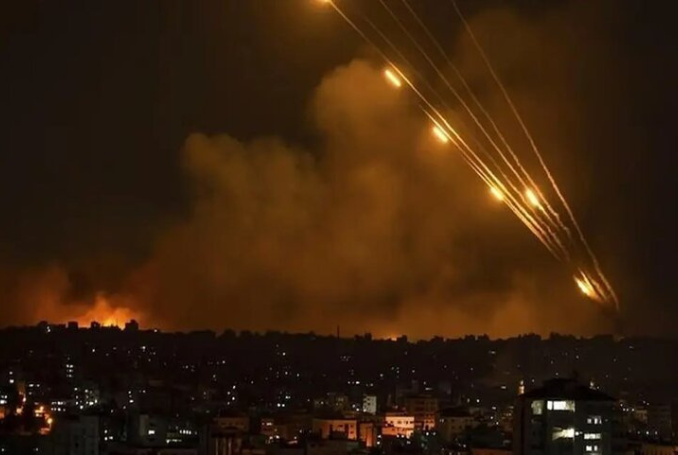
 Remember how a number of 🐍 Western pundits and 🦍 politicians were predicting that Iran would not retaliate against
  analysts when it comes to predicting what Iran will do.
 United States inadvertently engineered this attack. According to Iranian President Masoud Pezeshkian, he was promised a ceasefire in Palestine and progress on a two-state solution if Iran held its fire and did not punish Israel for killing Haniyeh. Pezeshkian, who turned out to incredibly naive, bought that
  fast learner. As night fell in Israel, Iran launched a massive ballistic missile attack.
 Iran's attack failed.
 This reminds me of that iconic clip from Leslie Nielson in The Naked Gun:
 Netanyahu
  has forgotten the first rule of crisis management -- when you are in a hole, stop digging. He now insists that Israel is going to respond by attacking Iran. Iran made it very clear in the wake of today's attack that if Israel responds with new attacks, Iran will
 follow suit with a more devastating barrage. I don't think Pezeshkian and the Mullahs are bluffing.


 🚀 🚀🚀 🚀🚀 🚀🚀 🚀🚀 🚀🚀 🚀🚀 🚀🚀💥💥💥💥💥💥💥💥💥💥💥💥💥💥💥💥💥💥

 of Gaza's
  Al-Aqsa Flood