AGelbert NOTE: I'm including the transcript in case Youtube tries to keep YOU from watching the video.

Oct 24, 2024 Chris Hedges
This interview is also available on podcast platforms and Rumble.
Decades of Islamophobia, relentless propaganda campaigns and heavily financed lobbying efforts have made it difficult to understand the political realities of the Middle East. John Mearsheimer, prominent political scientist, University of Chicago professor and self-proclaimed realist, has consistently demonstrated the courage and ability to bypass the noise, delivering honest and well-informed analysis on global affairs. He joins host Chris Hedges on this episode of The Chris Hedges Report to lay out what’s happening in the Middle East, from Israel’s genocide in Gaza to its escalating attacks on Lebanon and Iran.
Netanyahu and his cabinet have resorted to violence and escalation every step of the way thus far and any prediction of what’s to come involves more of the same. “I see [Netanyahu] escalating at every turn,” Mearsheimer tells Hedges. “And I think if you look at what's happening in Lebanon, that fits the pattern that you were describing. They're just going up the escalation ladder, looking and hoping that they can find a solution.”
Israel’s decisions are transforming world politics, with alliances hardening in response to their aggression: Russia and Iran on one side, the U.S. and Israel on the other. Even long-standing religious divides between Shia and Sunnis are beginning to fade as they join forces against Israel’s brutality and ethnic cleansing of Palestinians. Sunni Hamas, Shia Hezbollah and the Houthis, even the Saudis and Iran are starting to find common ground. “I think what's going on here is that Israel's behavior is so horrible. It's so terrible what they're doing, and America's support of that behavior is so horrible, so terrible, that what's happening is that the divide between Shia and Sunnis is beginning to melt.”
Despite this shift in the region and rising tension with Iran, the U.S. continues to be drawn deeper into the turmoil, with every Israeli provocation pulling its leadership further in— regardless of popular opinion. Mearsheimer says that while the majority of Americans do not support U.S. involvement in Gaza, “that doesn't translate into policy, because the lobby is so deadly effective on Capitol Hill and in dealing with the executive branch.”
He has little hope in change, especially given the precedent of U.S. involvement in the Middle East and its complicity in the genocide thus far. “I think the lobby remains as powerful as ever, if not more powerful in terms of influencing the actual US policy,” Mearsheimer asserts.
Thanks for reading The Chris Hedges Report! This post is public so feel free to share it.
Share
Host:
Chris Hedges
Producer:
Max Jones
Intro:
Diego Ramos
Crew:
Diego Ramos, Sofia Menemenlis and Thomas Hedges
Transcript:
Diego Ramos
The Chris Hedges Report is a reader-supported publication. To receive new posts and support my work, consider becoming a free or paid subscriber.
Upgrade to paid
Transcript
Chris Hedges
There are few political scientists endowed with the brilliance and courage of John J. Mearsheimer, the R. Wendell Harrison Distinguished Service Professor in the Political Science Department at the University of Chicago, where he has taught since 1982. He graduated from West Point in 1970 and served five years as an officer in the U.S. Air Force. He has written extensively about security issues and international politics including in his books Conventional Deterrence, The Tragedy of Great Power Politics, The Israel Lobby and U.S. Foreign Policy (which he co-authored with Stephen M. Walt from Harvard) and The Great Delusion: Liberal Dreams and International Realities.
He has been a prescient critic of the follies of late empire, the insidious and corrupt workings of the Israel lobby in the American political system and the fiasco in Ukraine.
Joining me to discuss the conflagration in the Middle East, the overreach by the U.S. and Israel and the consequences of this overreach for regional and global stability, is professor Mearsheimer.
Let's begin with the Israel lobby, because it's relevant to everything that's happening. I remember your great book that you did with Walt. You took a lot of heat for this, not as controversial today. I mean, I think it's a kind of recognized truth, but the fact that the Israel lobby has essentially bought the US Congress, which means that has bought endless supplies of military aid and given it a kind of impunity to engage in overreach is, I think, being evidenced now. I mean, what Israel is fighting, in essence, on five fronts. So let's talk about the lobby and how it has affected regional stability and Israeli policy.
John Mearsheimer
Well, the thing is, Chris, that the lobby insists that the United States give Israel unconditional support, and this is certainly the case when you're dealing with the Palestinians. That means the Israelis are pretty much free to do anything they want, including commit genocide in Gaza, and we'll back them anyway. And this is what you see at play today. So when people talk about Israel's wars in the Middle East, you know the war in Gaza against the Palestinians, the war in Lebanon against Hezbollah and the war between Israel and Iran, you're really talking about a war that involves the United States and Israel joined together at the hip. We're deeply involved in these conflicts. Fortunately, we don't have soldiers on the ground who are dying. Of course, we now have some soldiers on the ground in Israel, but not many. But the fact is that we are supplying the Israelis with all sorts of arms, all sorts of diplomatic support, and we allow them to do pretty much anything they want. And this has huge consequences for the region. It certainly has huge consequences for the Palestinians, and it has huge consequences for the United States.
Chris Hedges
Let's talk about some of those consequences. Israel has, of course, been bombing in Lebanon. It's been bombing in Syria, Yemen, not to mention its saturation bombing of Gaza. Remember, Gaza is a very tiny place, 20 miles long, five miles wide, virtually decimating Gaza, but let's talk about the consequences of that. Israel waded into Lebanon in 1982 it didn't go very well for them, despite their overwhelming firepower.
John Mearsheimer
Well, let's just talk about the Lebanon War, then we could talk about Gaza. They're obviously fighting against Hezbollah, because Hezbollah is supporting Hamas, and it's supporting Hamas by firing rockets and some missiles into northern Israel. And the end result is somewhere between 60 and 70,000 Israelis have had to flee the northern part of Israel and move temporarily into the center and then Netanyahu government, unsurprisingly, is deeply committed to getting those people back to their homes in the north. So it wants to stop Hezbollah from firing missiles into northern Israel. Hezbollah says the only circumstance under which it will stop firing those missiles is if you stop the war or the genocide in Gaza, and the Israelis, of course, refuse to do that, because they're bent on ethnically cleansing Gaza. So the end result is the Israelis have to figure out another way to deal with Hezbollah, and the first strategy they employed was decapitation. And of course, they killed [Hassan] Nasrallah and a number of other high ranking Hezbollah officials, and that had no real effect. Then they decided they were going to start pummeling the cities and towns in southern Lebanon and Beirut as well and kill lots of people. And this punishment campaign would hopefully get Hezbollah to throw up its hands and quit. That hasn't worked either. So they've then pursued a third strategy, which is to invade southern Lebanon with ground forces, which is what they have been doing for the past few weeks. This isn't working either. And if you read the Israeli press every day, you see that Hezbollah is continuing to fire 130, 140, 150 rockets into Israel every day. So they're not solving the problem. And I would add to that, they're not solving the problem in Gaza, and they're not going to solve their problem with Iran by using military force. So all this is to say that the Israelis are in deep trouble, and because we're joined at the hip with the Israelis, we're in deep trouble too.
Chris Hedges
You say deep trouble. Let's spell that out, what deep trouble means for Israel and what deep trouble means for us.
John Mearsheimer
Well, just let's talk about the Israelis, to start with. Israel has always emphasized that the last thing it wants to do is fight a protracted war, a war of attrition, and what it wants to fight instead are quick wars, wars that last six days, like the famous Six Day War in 1967. Furthermore, the Israelis have long emphasized that they want to be capable of fighting those wars all by themselves. They don't want to have to depend on another country. Well, if you look at what's happening today, they are involved, in my opinion, in three separate wars that show no signs of ending, that have been going on for at least a year and this means that the Israelis are in real trouble, because they can't win this set of wars quickly and decisively. Furthermore, it's very clear, if you look at how the conflict is being waged, that the Israelis are highly dependent on the Americans. They're not only dependent on the American industrial base for weaponry, they're also dependent on American military forces to help them fight their enemies. You want to remember that on April 14, when Iran attacked Israel, that the United States played a key role in helping Israel defend itself against Iran's missiles and drones, and we are expecting, any day now, another attack by Israel against Iran, and then Iran is expected to retaliate. Well, if Iran retaliates, we now have more forces than ever in Israel to help Israel defend itself. Why? Because Israel itself cannot fight off the Iranian missile attack. So you have this very interesting situation where not only can Israel not win these wars that it's fighting, but they've turned into protracted wars, and they're protracted wars in which Israel is heavily dependent on the United States. All this is to say they're in serious trouble.
Chris Hedges
And what are the consequences of that, ultimately? I mean, the of course, Israel would like to displace or ethnically cleanse the Palestinians in Gaza into the Sinai, but the Egyptian military is just in Egypt has been categorical to Sisi that that is never going to happen. So we know the intent, but can they really push the people out of Gaza, and although they are in big trouble, they're on the verge of annexing northern Gaza. They put it under siege. The 400,000 Palestinians are being slaughtered, starved. I mean, it does seem that incrementally, they are moving towards what it is they want.
John Mearsheimer
I think you can make that argument. I think that it's clear that they're not interested, at the moment, in cleansing all of Gaza, that they're focusing mainly on Northern Gaza. Tony Blinken was in Israel yesterday, and this is Tuesday, and he told the Israelis, and he was speaking here to Netanyahu and his lieutenants, the word was out that they were trying to ethnically cleanse northern Gaza and push all the Palestinians into the southern part of Gaza. And he made it clear that that was unacceptable. The Israelis, of course, denied that they were doing that, when, in fact, the evidence is overwhelming that that's exactly what they're doing. And the question then is, can Blinken or Biden bring pressure to bear on the Israelis to get them to change their behavior? And the answer there is almost certainly no. So I think there will be significant cleansing of Northern Gaza, but that doesn't mean the Palestinians will be driven completely out of Gaza. They'll still be locked in Gaza, just in a smaller space. And the question is, where does that leave the Israelis? They're still running Gaza, and at the same time, one does not want to underestimate the damage that's being done to Israel's reputation. This is a moral stain on Israel that is not going to go away for the foreseeable future. It's not going to go away for a long time. Israel is going to be widely seen as a country that has committed genocide in Gaza, and this is going to do huge damage to Israel's reputation moving forward. And furthermore, it's going to do huge damage to America's reputation, because we are widely seen as being joined at the hip with the Israelis. We are complicit in this genocide, and this is going to have long term consequences.
Chris Hedges
Now I just want to make two points: 1973, Israel depended massively on us support, because so much of their own armor and everything was wiped out. You had C-130s landing in Israel every 30 minutes courtesy of Henry Kissinger to resupply the military. That's number one. Number two, in terms of lying to the Americans, go back to 1982. The Americans begged Israel not to bomb West Beirut, and Israel just did it anyway. These are just patterns that we have seen vis a vis the relationship with the United States.
John Mearsheimer
Chris, there is absolutely no doubt that the Israelis are able to do whatever they want, whether you're talking about 1982 or the present, and there's not much we can do to stop them. Again, this is the power of the lobby. The lobby insists that the United States provide Israel with unconditional support no matter what it does. So if the Israelis disobey us, we just bite our tongue and go along with it. It's just the way it works. So you're correct on that point. With regard to weaponry, there's no question that the Israelis have always depended on us for weaponry, and before they depended on us, they depended heavily on the French. So there's no question they've gotten outside support in terms of providing them with weapons, but what I was talking about is actually helping them to fight their wars. You want to understand that the Israelis need us in the fight at this point in time. We have lots of assets in the Middle East at this point in time. Lots of assets in the eastern Mediterranean and in Israel itself and in the Red Sea that are all designed to fight, to help Israel in its various wars. And this includes not just Iran. It also includes the Houthis, and it includes Hezbollah as well. So we are deeply involved in helping them fight in ways. That was not the case in 1973 or any time before this war.
Chris Hedges
So let's look a little bit of the consequences for the United States. I mean, first of all, we have 20 years of military fiascos in Iraq, Afghanistan, Syria, Libya, which is, to put it mildly, alienated the Muslim world, 1.5 billion Muslims and much of the Global South. And then we have had all the scandals of Abu Ghraib and drones gunning down civilians, etc. So our situation is, certainly within the Middle East, already precarious. What happens now? I mean, you said that it's bad news for the United States. Lay out the consequences.
John Mearsheimer
Well, if you think about what's happening at a macro level, what you see is that the United States has pushed China and Russia and North Korea and Iran very close together. They form a very tight knit bloc at this point in time. Largely as a result of the Ukraine war, the Russians and the Chinese have been driven together, and given what's happening in the Middle East, the Iranians and the Russians have been drawn together. So the United States may be helping Israel, but it's important to understand that the Russians are helping Iran as well, and this situation is not to our advantage. It's not to America's advantage to have China and Russia aligned closely against Washington. It's not in America's interest to have Russia and Iran working together against Israel and the United States. There's always the possibility that if a war heats up involving Iran on one side and the United States and Israel on the other side, that at some point down the road that the Russians will get dragged into that war, because the Russians now have a vested interest in supporting Iran. This is not to our advantage. Then there's the whole issue of nuclear proliferation, one of our principal concerns over time, and of course, is one of Israel's principal concerns as well, is to make sure that Iran doesn't get nuclear weapons. Of course, Iran has the capability to produce a bomb, actually, quite quickly. It has enough fissile material that it could do that, and we, by allowing the Israelis to bomb Iran and get into this fight with Iran, are giving the Iranians very powerful incentives to get a bomb, to throw aside their non-nuclear status and become a nuclear weapons state. And if that happens, the Saudis have said that they would acquire nuclear weapons. And if the Saudis acquire nuclear weapons, and the Iranians have nuclear weapons, surely the Turks, the Iraqis and the Egyptians won't be far behind. So for purposes of limiting or capping nuclear proliferation in the Middle East, which is a very important goal for us, Israeli behavior is undermining our policy on that front. So these are just two ways in which our support of Israel is working to hurt us.
Chris Hedges
And yet there's been a long reticence among US policy figures, as well as the Pentagon, to any kind of a confrontation with Iran, going all the way back to the Bush administration, when Netanyahu was pushing the same agenda, war with Iran.
John Mearsheimer
I mean, what's really amazing here, Chris, is that the Iranians don't want a war with us, and we don't want a war with Iran. It's very clear, it's the Israelis who are trying to bait us into a war. You want to remember that what got all of this started was that on April 1, the Israelis attacked the Iranian embassy in Damascus, and the Iranians then retaliated on April 14 against Israel, and then Israel had a minor retaliation on April 19, and at that point it looked like we had shut things down, and we were going to avoid a war between Israel and Iran, and certainly between Iran and the United States, which is what we wanted and the Iranians wanted. Then, on July 31, the Israelis killed Ismail Haniyeh, the Palestinian, the Hamas leader in Tehran. They actually struck in Tehran. This was on July 31. In response, unsurprisingly, on October 1 of this year, the Iranians launched about 180 plus ballistic missiles at Israel, and now we're waiting for Israel to retaliate, and then, of course, the Iranians have made it clear they're going to counter retaliate, and then the Israelis will probably counter, counter retaliate. So what's happening is we're going up the escalation ladder. And at the same time, the United States has pledged itself to help Israel defend itself. We did this on April 14 in the first round, and we will do it again on October 1, and we'll do it again if there's a counter retaliation by Iran. So you can see we're inexorably being pulled into this conflict between Israel and Iran that we don't want and Iran doesn't want. But again, we just have remarkably little leverage over Israel's behavior, in large part because the Israel lobby protects Israel.
Chris Hedges
Why does Israel want a war with Iran? I mean, Israel pushed for a war with Iraq to essentially destroy the power base. You know, Saddam [Hussein] was a major regional power. They succeeded largely, although Iraq is dominated by Shias, Iran is Shia. They're very closely allied now. But why Iran? Iran is not a Lebanon. It's a completely different animal. Well,
John Mearsheimer
Well, I think that the Israelis believe that they alone cannot take out Iran's incipient nuclear weapons capability, but the United States and Israel, working together, can do that, and I think they'd like to drag us in so that we can eliminate the Iranian nuclear capability once and for all. This is a pipe dream. It's not going to happen, even if the United States is involved, but many Israelis seem to believe it. The second point is they view regime change in Iran as feasible. They think that we, the United States and Israel, can inflict enough pain on Israel, maybe even execute a decapitation strategy. And the end result is that the existing regime in Iran, which is hostile to Israel, for sure, will disappear, and you will get a friendly regime, and we will live happily ever after this too is a pipe dream. And then third, and not to be underestimated, is, I think the Israelis want a general conflagration in the region, because that's the best way to do ethnic cleansing in Gaza and in the West Bank. There have been two big instances of ethnic cleansing in the past. One was in 1948 with the infamous Nakba, and the second was in 1967 mainly on the West Bank in the context of the Six Day War. The Israelis understand full well that if you have a general conflagration, people will not be paying much attention to the Palestinians, and people will be willing to give Israel more of a pass than they would in peaceful times. So let's really ramp things up. Let's have a general conflagration, and the end result will be that we can cleanse, on a massive scale, in Gaza and hopefully in the West Bank as well. Those are the various reasons I'd point to.
Chris Hedges
Let's talk about air power. So Israel has used air power, as well as artillery and tank rounds and naval bombardment to obliterate the infrastructure in Gaza, quite effectively. It relies primarily on air power to attack Lebanon, again with massive destruction. Of course, used its air power to bomb the consulate in Damascus that killed senior Iranian officials, and I assume that it is going to rely, perhaps with US support, on air power to go after Iran. The idea that there would be, I don't know how what your position on this. I mean, do we reach a point where air power has limits. You're a former Air Force officer, so you can explain that far better than I can, but there's only so much you can do with air power. Do you foresee the possibility of ground troops going? Iran's a huge country. What's the population 90 million or something? Where do you see that going? And talk a little bit about both the use of air power and its limitations.
John Mearsheimer
Well, air power, the way the Israelis used it, is employed for two different purposes. One is decapitation, and two is what you were describing, Chris, which is a punishment campaign, basically murder in huge numbers of civilians on the premise that if you kill enough civilians, they will put great pressure on their government to throw up their hands and accede to Israeli terms or maybe even overthrow the government. We have a very rich literature in international relations that shows, number one, decapitation does not work. And in fact, Israelis have been decapitating Arab leaders for a long, long time, and it has not worked. And furthermore, we have a huge literature in international relations that shows that punishment campaigns don't work. You can go back to World War Two to find plenty of evidence to support that. You can go back to the Vietnam War to find plenty of evidence to support that. You can kill huge numbers of civilians, and rarely, if ever, do the civilian populations rise up against the government or put pressure on the government to change its behavior. So air power is a tool of greatly limited utility for Israel. I mean, the Israelis like to use the tool because it doesn't involve many Israelis, if any Israelis, getting killed. It's not like sending ground troops into southern Lebanon, where lots of Israeli soldiers are going to die. They'd much prefer to use air power. But the problem is, it just doesn't buy you that much in the end. There's no question that the amount of destruction that the Israeli air force causes is great, but whether or not it produces success as defined by Israel, is another matter, and there, the answer is quite clear. Now you raised the issue, given this situation, will we put ground forces in Iran? I would just go back to my discussion earlier, Chris, of Lebanon, who, remember, I said the Israelis first tried decapitation, then they tried punishment, and then they sent ground forces into Lebanon. So I think your sort of intuition that maybe they'll think about doing this with regard to Iran, is on the money. That's the pattern we saw in Lebanon. But I find it almost impossible to imagine that the Israelis and certainly the Americans would put ground forces in Iran, that would be really asking for trouble. That is, as you pointed out, a huge country with a big population, and we would get ourselves into serious trouble. You know how much trouble we got into in Iraq when we went in there in 2003 this one...
Chris Hedges
Just to interrupt, it would be seen as a war against Shi'ism. So Iraq is primarily Shia, about 60%. You would certainly have an alliance with other Shia groups outside of Iran against any kind of direct American intervention.
John Mearsheimer
You know what's interesting, Chris, you know, oftentimes we distinguish between Shias and Sunnis, and we emphasize the cleavage there. But I would note to you that there are only two groups on the planet that have really come to the aid of Hamas, and Hamas is mainly comprised of Sunnis, of course, but one is Hezbollah. And Hezbollah is a Shia organization. So this is Shia coming to the aid of Sunnis in Gaza. And the Houthis. And the Houthis are mainly Shia. I think what's going on here is that Israel's behavior is so horrible. It's so terrible what they're doing, and America's support of that behavior is so horrible, so terrible, that what's happening is that the divide between Shia and Sunnis is beginning to melt. And in fact, I've seen a few articles in the newspapers over the past few days that talk about how the Saudis and the Iranians are now talking to each other. And this is a case, obviously, of Sunnis and Shia coming together. And why are they coming together? Because they are so distressed, so outraged by what is happening in Israel that they're trying to figure out how they may work together to shut this down.
Chris Hedges
Let's talk about, internally, what's happening within Israel. Businesses are closing. There are credible reports in the Israeli press that the numbers of wounded are far higher than the official statistics. As, you know, because of distances, you can be grievously wounded in Gaza, put on a helicopter and receive very sophisticated medical attention very quickly, which may save your life, but you will be debilitated for as long as you live. And then you would have to go back to the kind of political divides that were taking place in Israel before October 7, the kind of constitutional crisis. People, again, they hide the numbers, but estimates are as high as half a million Israelis have left the country since October 7. So this has all put tremendous stress internally within Israel. Can you address that?
John Mearsheimer
I agree with everything you said, and I would just add to this that you want to remember that Israel is in a protracted war that it is unable to shut down. At the moment, they may pull a rabbit out of a hat and shut down these three conflicts. I would not bet a lot of money on it, but the problems you described are only going to get worse with the passage of time. I mean, first of all, the economy. The economy has been badly damaged by this war for all sorts of obvious reasons. Tourism is down. All sorts of people who operate businesses have been called up to serve in the reserves and the businesses have shut down. Companies in the West are not investing in Israel, as they once promised to do. So, there are all sorts of big economic problems here. And as you point out, and not to be underestimated. There was all sorts of talk about a civil war in Israel before October 7. This is a badly divided society that has all sorts of fundamental issues at play that haven't been resolved, and once the shooting stops in this war, those problems will rise to the surface. They've been somewhat tamped down now because Israel is involved in three wars, but those problems have not gone away. With regard to the state of the military, it's very clear that they're having trouble getting all the reservists that they're calling up for a second, third or fourth time to report for duty, because people are just worn out and they don't want to continue serving. They have families, they have jobs, and they want to go do those things. They don't want to serve in the military. So this is a big problem for the Israelis, and as you point out, there are a good number of wounded and killed, and those numbers are only going to go up with the passage of time. So this is a society that is in real trouble. It has all sorts of cleavages inside it. Centrifugal forces is the word I like to use. And once this is over with, and people take stock of what has happened, I think the situation is going to be mighty grim. You know, a lot of what's going on now is happening so fast that it's difficult for all of us to take stock of it. But at some point, when the shooting stops, we're going to take stock of what has happened. People are going to write articles, they're going to write books, they're going to produce documentaries. And the story that people are going to tell about Israel and how it has behaved is going to be blood curdling. It's just amazing what horrors the Israelis have been inflicting on the Palestinians, and of course, we see some evidence of this, because it's all thoroughly documented. But once the war stops, and people have an opportunity to sit back and think about it in a more careful way, I think the consequences for Israel and the consequences for the United States, especially the Biden administration, are going to be great. If I can just add one point to this, as you well know, Chris, we have in the United States this huge human rights community that prides itself on privileging human rights and making the argument that the United States should pursue a liberal foreign policy that supports liberal values and supports human rights. Where has this community been since October 7? Where is this community when all these horrors are taking place in Gaza, when, in fact, a genocide is taking place in Gaza, they're all basically AWOL. They're not there. Where is this human rights community? It's really quite shocking to me, the extent to which people in liberal America and liberal Europe have remained silent, if not complicitous in this genocide in Gaza.
Chris Hedges
The historian Ilan Pappé is saying, potentially, Israel as a Zionist entity won't exist within three years. Is that a prediction you think is plausible?
John Mearsheimer
No, I don't think so. I think Israel will be around for the foreseeable future. It's very hard to tell what its future looks like. I think that when this war ends, that huge numbers of secular Israelis will leave, go to Europe or go to the United States. I think that they will, number one, recognize the centrifugal forces at play inside the society, and that they will understand full well that the balance of power between secular forces and more religious and right wing forces is steadily shifting against the secular forces and in favor of the more religious forces. I mean, people like Smotrich are not going away. Ben-Gvir, he's not going away. They're going to be more people like that in Israel in the future, and this is going to drive a lot of secular Israelis away. And the end result is, I think Israel will become a more hawkish, a more religious state in the future than it is now. I don't think it will go away, though. I think it will be much harder for the United States to support Israel in those circumstances. I think the lobby will have to work harder than ever to get the United States to support this country unequivocally, but the lobby will, I think, rise to the task, and that will not be good for domestic politics in the United States. But I think that's the picture you see. And I think for the Palestinians, if you think about what is the future of the Palestinians inside of Greater Israel, and here we're talking about the Palestinians inside the Israel that was created in 1948, what we call Green Line Israel, plus Gaza and the West Bank. I think if you think about the future of the Palestinians in Greater Israel, it's a very dismal, if not categorically depressing, picture. It's hard to imagine the Israelis improving their behavior toward the Palestinians as abominable as it is now, I don't think it's going to get better with the passage of time. I think, if anything, it's going to get worse. This is a society that is in deep, deep trouble.
Chris Hedges
Let's talk about the lobby. Certainly, I've been to encampments at universities such as Columbia, Princeton, a significant percentage of the students protesting are Jewish, Jewish Voices for Peace. It's pretty clear that this next generation of Jewish men and women are not buying into the Zionist project. At the same time, the lobby has had to make pretty vast expenditures. That was $11 million they spent? Something like that to get rid of Jamaal Bowman. It does appear that it's becoming increasingly an uphill battle for the lobby. Has this changed? Since the genocide has it weakened the power of the lobby?
John Mearsheimer
Well, I think what's happened here, Chris, is that there has been a fundamental change in the discourse about Israel. Going back to, I'd say when Steve and I wrote our article 2006 and then the book in 2007 I think that we played a key role, at the risk of sounding like I'm bragging, in sort of opening the discourse on Israel and on the lobby and on the US-Israeli relationship, and all sorts of other people have come in and played a key role in laying out, in even greater detail what Israel is up to, what the lobby is up to. So we're at a point now where the discourse has changed. The mere fact that you and I are having this conversation says a great deal about what's happened to the discourse. And as you point out quite correctly. And I always like to emphasize this, it's very important to understand that there are lots of Jews who are on the right side on this issue. You mentioned Jewish Voice for Peace. I have enormous respect for the people in Jewish Voice for Peace. And in a lot of the campus demonstrations at Columbia and Chicago and all sorts of other places, there were lots of Jewish students involved. So the lobby has a real problem with the discourse. There's just no question about that. But where they remain amazingly effective is at the policy level. So you now have this disjuncture between the public discourse and what's happening at the policy level. If you look at public opinion polls in the United States and you look at what American respondents say when they're asked whether they think Israel is committing a genocide in Gaza, you'll see that over 50% of Americans think that, and you'll see that lots of Americans don't support us, meaning the US government supporting Israel unconditionally, right? But the fact is, that doesn't translate into policy, because the lobby is so deadly effective on Capitol Hill and in dealing with the executive branch. So the question you have to ask yourself is whether or not, given the shifting opinion inside the Jewish community, given what's happening in terms of the discourse, whether you know, in the future, an American president and Congress can go along with Israel at the policy level no matter what. And I think there is no evidence that anything has changed at that level. I think the lobby remains as powerful as ever, if not more powerful in terms of influencing the actual US policy.
Chris Hedges
Let's end by talking about Iran all the ways this could go wrong. Iran, you referred to Iran's response. It was telegraphed in advance. I mean, one could call it even choreographed, the first response. The second response, less so. But I think there was a Palestinian who was wounded and there weren't large numbers of casualties, and one has to believe that that was intentional, but how could you see this playing out in a way that essentially creates a conflagration that we get sucked into and what would that look like?
John Mearsheimer
Well, just to repeat what you said, the first attack on April 14 and then the Israeli response on April 19 was choreographed, to use your rhetoric. Because, again, the Israeli, I mean, the Americans and the Iranians did not want a major war involving them. And also, as you pointed out, if you look at what happened on October 1 when Iran struck Israel, that was quasi-choreographed as well. And as you point out, quite correctly, the Iranians did not target civilians. I think there was only one person killed in the October 1 attack, and that was a Palestinian on the West Bank who was hit by falling debris. So if you look at Iran's targeting, they've gone out of their way not to hit civilians. Now the question you have to ask yourself is, what is Israel's response going to look like, which we anticipate any day now, because that will influence what the Iranians then do. And one could imagine the Israelis really turning the dogs loose and killing lots of Iranian civilians, and the Iranians then feeling that they have no choice but to target Israeli civilians, you know, go after big urban areas inside of Israel. And then the question is, where does that lead? Because you're up on the escalation ladder, and it's hard for me to imagine that if Israel strikes tomorrow and Iran strikes a week later, that the Israelis won't go back at the Iranians. And if that happens, it's hard to imagine that the Iranians won't go back at the Israelis. So it's just sort of hard to see how we get off the escalation ladder once we go up it. And as you go up the escalation ladder, the possibility that large numbers of civilians will be killed, or even a small number of civilians will be killed is quite high, and that has great escalatory potential.
Chris Hedges
That's how the bombing campaign started in World War II. Because at the inception of the war, they were against aerial bombing of civilian targets, and the Germans dropped bombs, I believe it was on London and Churchill started dropping bombs on Hamburg and the Ruhr and everywhere else.
John Mearsheimer
I think that's exactly right. I mean, this relates to what we were saying before about how decapitation strategies and punishment strategies don't work. If they don't work, the question is, what do you do next? I mean, if you're the Israelis, imagine yourself in Netanyahu's shoes today. Things are not going well in Gaza. Things are not going well against Hezbollah, and it's hard to imagine how you can sort of bring Iran to its knees, save these three big problems. What do you do? And his, I think basic instinct in these cases is to escalate. He believes in big stick diplomacy. He thinks every problem can be solved with military force. He has no sense that war is an extension of politics by other means, as Clausewitz put it. And these are basically political problems. If you want to solve the problem with the Palestinians, you're not going to do it with a big stick. It has to be done politically. But he doesn't understand that. He likes to use the big stick, but he's using the big stick. It's not working. He's in these protracted wars, which, as you pointed out, are having all sorts of consequences, negative consequences on the home front, and they're not producing the outcomes he wants. So the question is, what does he do next? And I see him escalating at every turn. And I think if you look at what's happening in Lebanon, that fits the pattern that you were describing, right? They're just going up the escalation ladder, looking and hoping that they can find a solution. But if you ask me, Hezbollah is a, you know, a tough nut to crack, and I don't see Hezbollah cracking.
Chris Hedges
The United States has supposedly, according to press reports, extracted a promise from the Israelis not to attack Iranian nuclear facilities. I think, as we have pointed out, Israel has, in the past, said one thing the United States or said that they would honor US demands, and then ignored it. Of course, we see that currently, with the Netanyahu government claiming to Blinken that they're not creating a siege around Northern Gaza with complete blockage of all food. Well, of course, they are. What do you predict in terms of strikes? Do you think that they will... I mean, you said earlier that they want to break the nuclear program, although my understanding is a lot of that stuff is deep inside of mountains and very far underground. Is that the number one priority for Israel?
John Mearsheimer
One could make the argument, it's the number one priority, but they can't do it by themselves. I think there's no question they can't do it by themselves to get at a target like Fordow is almost impossible without the Americans who have bombs that can penetrate much deeper into the ground. It's not clear that if the Americans and the Israelis together try to do it, that they can eliminate Iran's nuclear program for the short term. I want to emphasize here, they cannot eliminate Iran's nuclear program once and for all. This is a pipe dream. They may be able to do it in the short term, that's not clear. Israel and the United States, working together, they may be able to eliminate most of the facilities and delay Iran getting the bomb, but they can't stop it forever. It's very important to understand that I don't know exactly what to say Chris, as to what the Israelis are likely to do. This would be my guess. My guess is that, if you're the Israelis, you don't hit the nuclear targets at first, and what you do is you hit other targets. And what you count on is going up the escalation ladder, bringing the Americans in. And then once the Americans are in, then you can go after the nuclear targets, or the nuclear sites. Again, the Israelis can't do that by themselves. And their response that's forthcoming to the October 1 is going to be the Israelis on their own, so they can't get the nuclear sites. So it would seem to me that it would be better to just try to escalate, get the Americans in, get the Americans really angry, and get the Americans and the Israelis to go after those nuclear weapons sites. And here would be the Americans who would be doing most of the heavy lifting. Of course, you want to understand that we will go to great lengths to avoid that outcome, because we, as I said before, do not want a war with Iran, and we surely understand that you can't take out Iran's nuclear sites once and for all. It's just a temporary solution, and they'll get nuclear weapons, and they'll be mad as hornets, and that will lead to more proliferation in the region. So again, this is not in our interest, but if you're Israel, you can make a case, given what their goals are, to go up the escalation ladder.
Chris Hedges
Well, we'll find out very soon, unfortunately. That was Professor John Mearsheimer. I want to thank Diego [Ramos], Thomas [Hedges], Sofia [Menemenlis] and Max [Jones] who produced the show. You can find me at ChrisHedges.Substack.com.
https://chrishedges.substack.com/p/the-escalating-crisis-in-the-middle
 Recent Posts


 Jimmy Dore Show
 are the



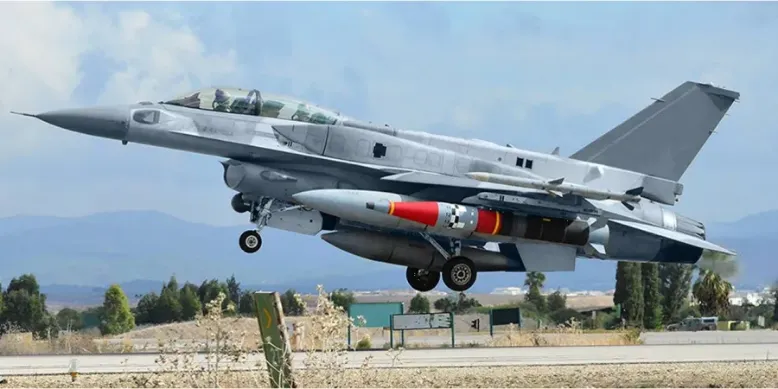
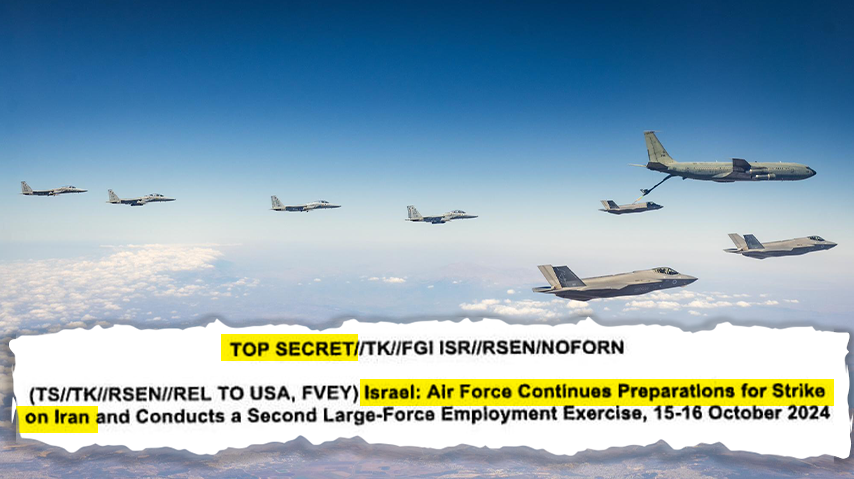

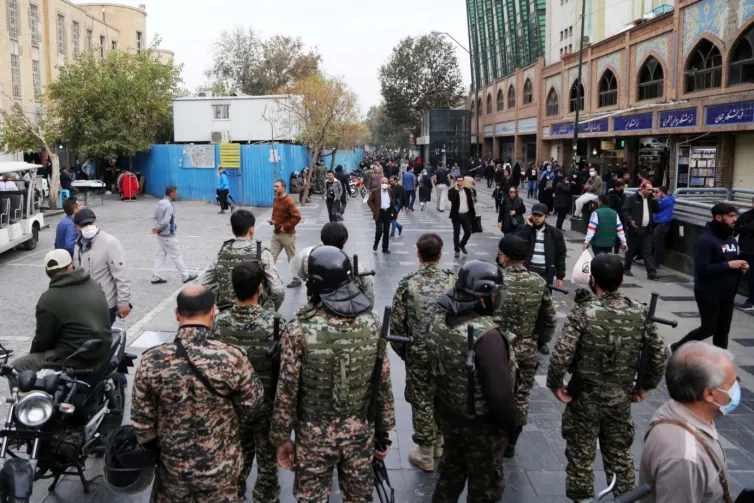
 reach.
 our people and protect our country.” Netanyahu noted that the Iranian government was bringing Iranians
  "closer to the abyss,” adding that Iran and Israel would be at peace only
  when Iran is “finally free,”
  something
  Netanyahu said would “
 come a lot
  sooner than people think.”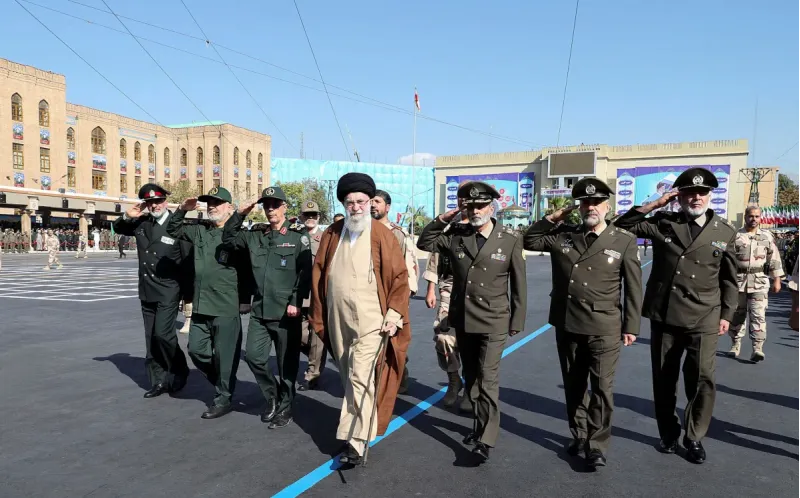


 “
“
 let this sink in
 Wake up, America.


 world is being born


 God is not mocked.


 213K subscribersOctober 23, 2024 #TheElectronicIntifada #TheElectronicIntifadaPodcast


 Here is the LIST:
  Adviser on Iran (2021-2023), Senior Advisor for Regional Integration (2023), Deputy Assistant Secretary of Defense for Middle East Policy (2023-2024)

